
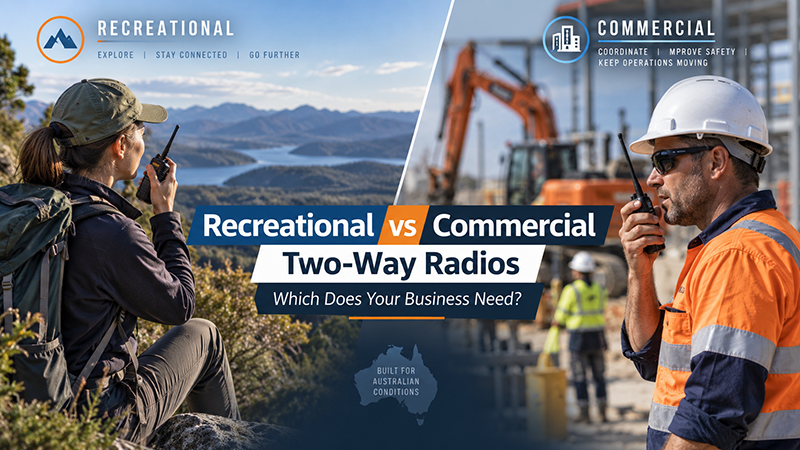
Recreational vs commercial two-way radios can look similar at first glance, but the right choice depends on how often they are used, how important the communication is, and what your team needs around the radio — batteries, chargers, earpieces, headsets, programming and support.

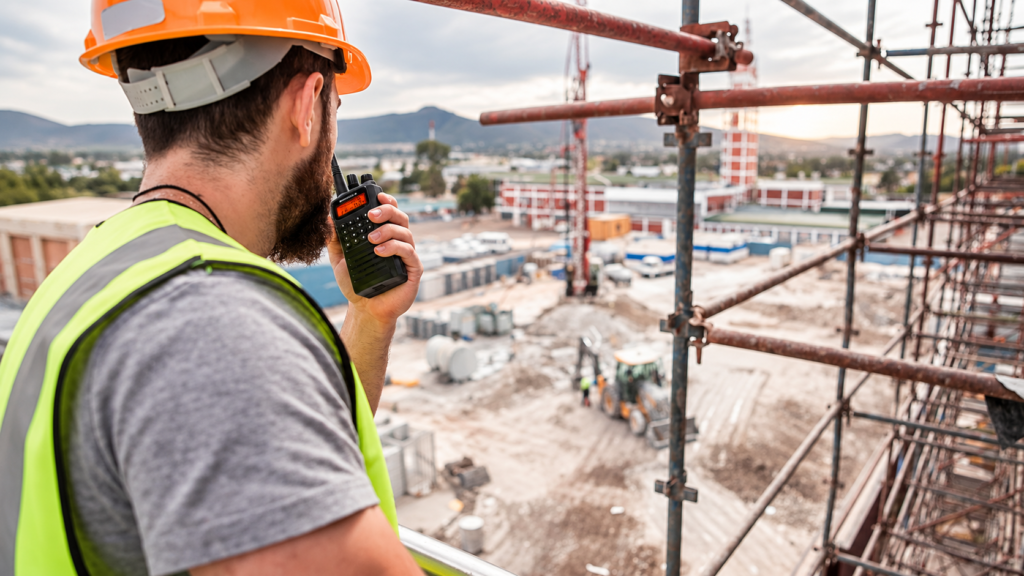
- Recreational/UHF CB radios can be ideal for 4WDing, camping, touring and light business use.
- Commercial two-way radios are better suited when communication is relied on every shift and the system needs professional accessories, programming, charging and support.
- A rugged UHF CB can still be a very capable radio — the difference is not simply “cheap versus expensive”.
- If you are buying for a team, talk to a specialist before ordering multiple units.
Two Radio Examples: UHF CB vs Commercial
These two models show why the category label alone does not tell the whole story. Both are rugged UHF handheld radios, but they suit different buying priorities and system requirements.
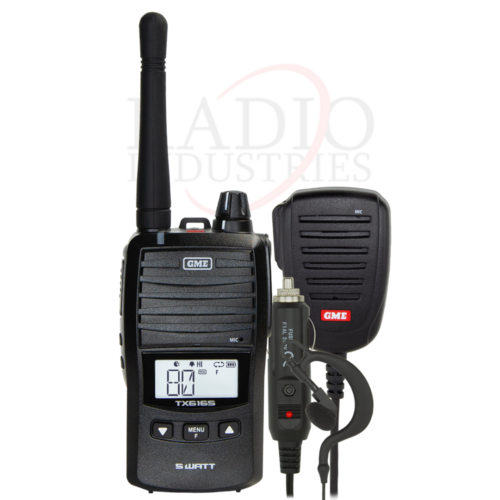
UHF CB / recreational-style option
GME TX6165
A rugged 5-watt, IP67 UHF CB handheld with long battery life and an accessory bundle. It is a strong fit for 4WD, outdoor use and lighter business applications where public UHF CB channels suit the job.
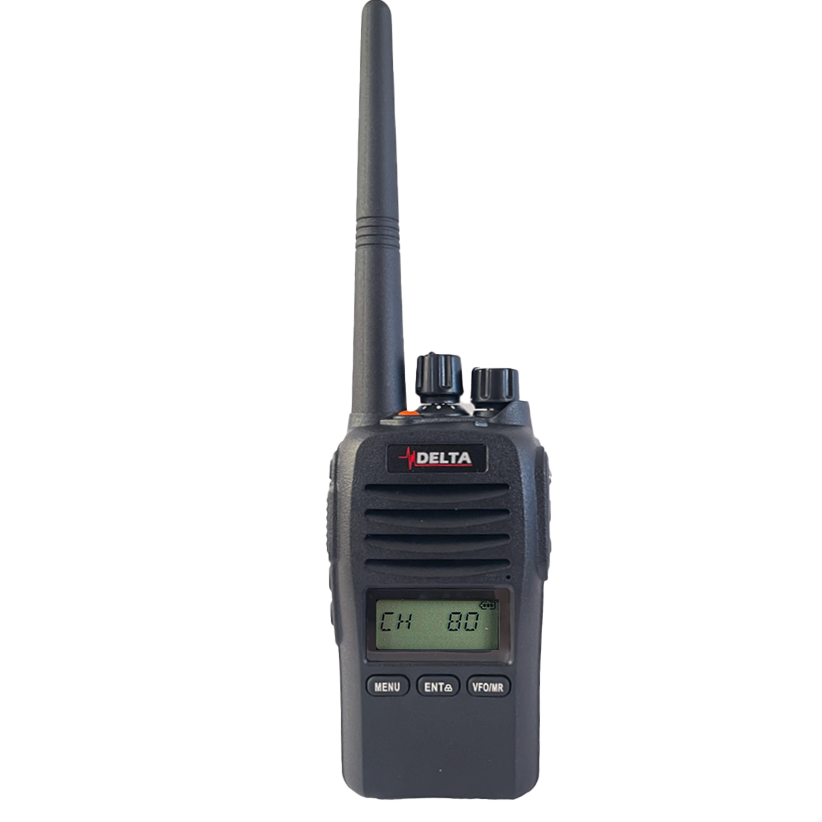
Commercial option
Delta AS310
An IP67 analogue UHF radio built for regular business use. It supports Australian UHF CB channels plus additional programmable commercial channels, and uses a Motorola 2-pin accessory connector for a wide range of professional audio options.
Recreational vs Commercial Two-Way Radio Comparison
| Factor | Recreational / UHF CB | Commercial Two-Way Radio |
|---|---|---|
| Typical use | Occasional, weekend or lighter-duty communication | Regular business use and shift-based communication |
| Typical users | Campers, 4WDers, touring groups, farms and smaller teams | Construction, security, warehouses, events, transport and industrial teams |
| Durability | Varies widely; premium UHF CB radios can be highly rugged | Ranges commonly include equipment designed around demanding daily use |
| Channels & setup | Usually public UHF CB channels 1–80 | Can support private licensed frequencies, analogue/digital channels, talkgroups and fleet programming |
| Battery & charging | Single chargers and model-specific options are common | Spare batteries and multi-bay charging are commonly available for shift work |
| Accessories | Often centred on that brand/model family | Typically broader professional ecosystems: speaker mics, covert earpieces, headsets, PTT adapters and specialist audio |
| Support | Often product-focused retail support | System design, programming, licensing guidance, servicing, repairs and hire support can be built around the fleet |
Important: the category alone does not decide quality. Some UHF CB radios are extremely rugged. The right choice comes down to duty, coverage, channel requirements, accessories and how critical communication is to the operation.
Which One Do You Need? Quick Self-Check
Accessory Connectors Matter More Than Most Buyers Expect
Accessory compatibility is one of the biggest practical differences buyers overlook. Recreational UHF CB radios from brands such as GME, Uniden and Oricom often use connectors and accessories specific to a particular model or model family. Even two UHF CB radios from the same brand may use different accessory connectors, so an earpiece, speaker microphone or headset that works with one model may not work with another. Cross-brand compatibility is even less common. This is why accessories should always be checked against the exact radio model before purchasing.
Commercial radios also use different side-connector standards, but they usually have a much broader professional accessory ecosystem around those connector families. Depending on the radio, that can include remote speaker microphones, covert earpieces, heavy-duty headsets, hearing-protection headsets, PTT adapters, multi-bay chargers and specialist audio accessories. Some commercial radios also use common connector families shared across several models.
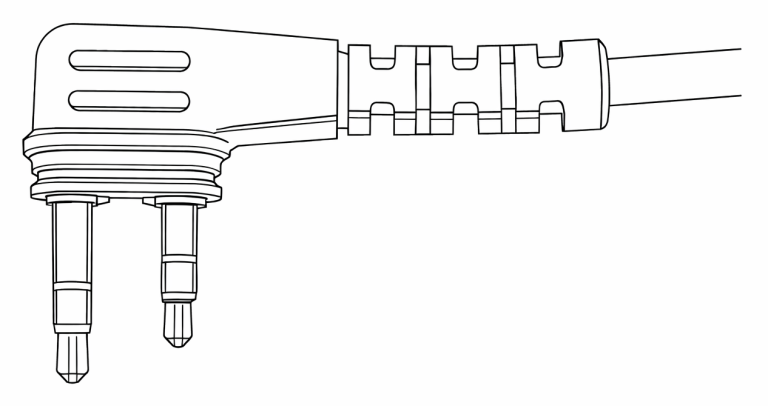
Example: GME connector family
The TX6165 uses a GME two-pin connector used on selected GME portable models. Accessories should always be checked against the exact radio model.
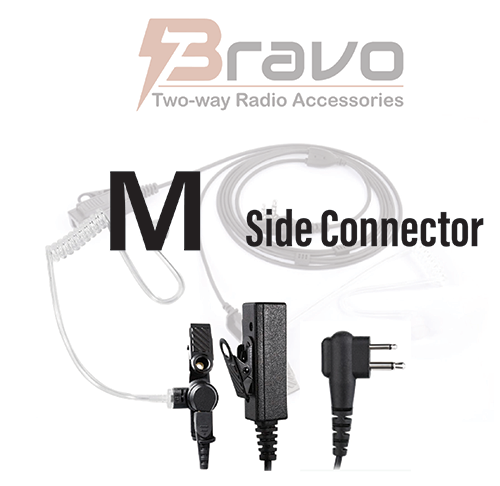
Example: commercial connector family
The Delta AS310 uses a Motorola 2-pin accessory connector, providing compatibility with a broad range of professional speaker microphones, earpieces and other audio accessories.
Need to match an earpiece, headset or speaker mic to an existing radio? See our connector compatibility guide or ask our team to confirm it before ordering.
Repairability and Spare Parts Matter for Business Radios
Repairability is another key difference between many recreational and commercial two-way radios. Commercial radios are typically designed as maintainable fleet equipment, with replaceable components and spare parts available for longer-term service. Depending on the model, items such as batteries, antennas, belt clips, knobs and some external accessories can often be replaced by the user without sending the radio to a technician.
When a more serious fault occurs, commercial radios are also generally better supported by service centres, parts diagrams and replacement components. This can extend the working life of a fleet rather than forcing the business to replace an entire radio because of one damaged part.
By comparison, some recreational UHF CB radios are primarily sold as complete kits. Spare parts such as belt clips, antennas, batteries or charging components may be limited, model-specific or difficult to source, particularly once a model becomes older. In some cases, replacing the complete radio can become the only practical option.
For a business running multiple radios every day, this matters. Parts availability, repairability and service support can significantly reduce downtime and whole-of-life costs, even when the commercial radio costs more initially.
| Factor | Recreational / UHF CB | Commercial Two-Way Radio |
|---|---|---|
| Repairability & spare parts | Parts availability varies; some models are primarily sold as kits with limited individual replacement parts | Typically designed for fleet maintenance with better access to batteries, antennas, clips, accessories, parts and service support |
Buying a Cheap Radio Online? Check Australian Compliance First
Some radios sold through overseas marketplaces and third-party sellers on sites such as eBay, Alibaba, Temu and similar platforms may be intended for overseas frequency plans rather than Australia. They may also lack the required Australian compliance labelling or be programmed on frequencies you are not authorised to use.
Examples commonly seen online include Baofeng UV-5R / UV-82-style radios, various imported Retevis, Ansoko, Tenway and Floureon models, and some overseas Motorola Talkabout / TLKR / PMR446 / FRS variants. That does not mean every product carrying one of those brand names is automatically illegal — legality depends on the exact model, its Australian compliance status, the frequencies it uses and the licence arrangements.
Before buying, check for the RCM (Regulatory Compliance Mark), confirm the supplier/model complies with Australian requirements, and make sure the radio will only operate on frequencies you are authorised to use.
Buying radios for a team rather than a weekend?
Before ordering multiple units, talk to a communication specialist. A short conversation about site size, range, noise, shift length, accessories and licensing can prevent an expensive mismatch.
Why Businesses Often Move to Commercial Two-Way Radios
The difference is not simply the handheld itself. A business communication system may need to account for coverage, charging, shift length, programming, accessories, repairability, noise levels, private channels and future fleet growth.
A warehouse might need six-way chargers and earpieces. A security operation may need covert audio. Construction crews may need rugged speaker microphones or hearing-protection headsets. Transport fleets may need a mix of vehicle radios, handhelds and wide-area communication. In those cases, system design becomes more important than buying the cheapest radio.
Why Talk to Radio Industries?
Frequently Asked Questions
Can I use a GME, Uniden or Oricom UHF CB radio for my business?
Yes. For light use, small teams and applications where public UHF CB channels provide the coverage you need, a quality UHF CB radio can be entirely suitable. Commercial radio becomes more attractive when the fleet is used heavily, requires private channels, professional accessories, programmed talkgroups or ongoing service support.
Is a commercial radio always tougher than a recreational radio?
No. Some premium UHF CB models are very rugged. Compare the actual IP rating, environmental specifications, battery system, controls, connector and support options rather than relying only on the category label.
Do commercial radios need an ACMA licence?
Not in every case. UHF CB operates under class licensing arrangements. Businesses using assigned private frequencies generally require the appropriate ACMA apparatus licence. Radio Industries can help determine which setup applies.
Can I use the same headset or speaker microphone on different radios?
Sometimes, but never assume it. Side connectors vary between brands and model families. Radio Industries can match the connector and accessory before you purchase.
How do I know if a cheap imported radio is legal in Australia?
Check for Australian compliance including the RCM, verify the exact supplier/model where possible, and make sure the frequencies and licensing arrangements are appropriate for Australia. Be particularly cautious with models imported for US or European radio services.
Can I hire or trial radios before buying?
Radio Industries offers radio hire for suitable applications. For larger fleets, a discussion or trial can help confirm the right radio, accessories and coverage before committing to a full rollout.
Still not sure which radio fits your job?
Tell Radio Industries how your team works. We can help you compare UHF CB, commercial analogue or digital radio, private-frequency systems and wide-area Push-to-Talk over Cellular.

Recent Comments