
Everything Australian Businesses Need to Know About Private Two-Way Radio Licences, Renewals, Costs and Compliance
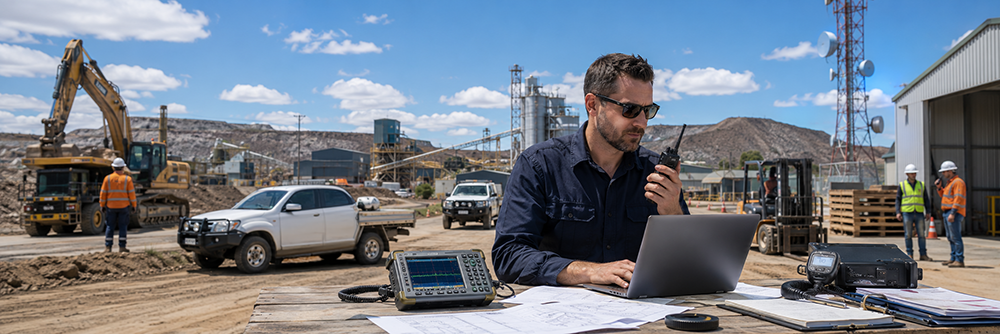
Do You Need an ACMA Licence for Your Two-Way Radios?
If your two-way radios operate on a private business frequency, you’ll generally need an ACMA radio frequency licence. If they operate on licence-free UHF CB channels, a licence is usually not required.
The exact answer depends on how your radios are programmed, where they’re used and the type of communication system your business operates.
This guide explains everything Australian businesses need to know about ACMA radio frequency licensing, including licence types, private frequencies, renewals, compliance and what happens if a licence expires.
“Do I need an ACMA licence for my radios?”
It’s a simple question, but the answer isn’t always straightforward.
Many Australian businesses purchase professional two-way radios believing they’re ready to use straight out of the box, only to discover that certain radio systems require a private radio frequency licence issued by the Australian Communications and Media Authority (ACMA) before they can be legally operated. Others assume their licence lasts forever after purchasing the equipment, not realising that frequency licences must be renewed to maintain legal operation. These are common misconceptions that can lead to unexpected costs, communication disruptions and compliance issues.
At Radio Industries, licensing enquiries are among the most common questions our team receives. Every week we assist businesses across Australia with ACMA licence applications, annual renewals, private frequency allocations, licence expiry issues, frequency interference, radio reprogramming and compliance advice. Whether it’s a new construction project, a growing warehouse operation, a mining site expansion or a transport fleet requiring reliable communications, understanding how radio frequency licensing works is essential for keeping operations running safely and efficiently.
This comprehensive guide has been created to answer the questions Australian businesses ask most often. We’ll explain the difference between licence-free and licensed radio systems, when an ACMA licence is required, how private frequencies are allocated, what happens if a licence expires, how much licensing typically costs, and the steps you can take to remain compliant with Australian regulations. We’ll also answer many of the questions commonly asked on Google, AI search platforms and by our own customers, giving you a practical understanding of how radio licensing works in real-world business environments.
Whether you’re purchasing your first business radio system, renewing an existing frequency, expanding to a new site or simply wanting to understand your legal obligations, this guide will help you make informed decisions and avoid costly mistakes.
By the end of this article, you’ll have a clear understanding of how ACMA radio frequency licensing works in Australia, when your business needs a licence, and how to keep your communication system compliant, reliable and operating without interruption.
What Is an ACMA Radio Frequency Licence?
Understanding How Business Radio Licensing Works in Australia
If your business relies on two-way radios for daily operations, understanding how radio frequency licensing works is essential. While purchasing quality radio equipment is an important first step, it’s equally important to ensure your organisation has the legal authority to operate on the frequencies being used.
An ACMA Radio Frequency Licence is an official authorisation issued by the Australian Communications and Media Authority (ACMA) that allows an individual or organisation to legally operate radio equipment on a specific radio frequency or group of frequencies. The licence gives the holder permission to transmit within defined technical conditions, helping ensure that radio communications remain organised, reliable and free from unnecessary interference.
Unlike a mobile phone network, where telecommunications companies manage access to the network, two-way radio communications operate across Australia’s limited radio spectrum. Because thousands of businesses, government agencies and organisations rely on radio communications every day, ACMA carefully manages how these frequencies are allocated to prevent users from interfering with one another.
Who Is the Australian Communications and Media Authority (ACMA)?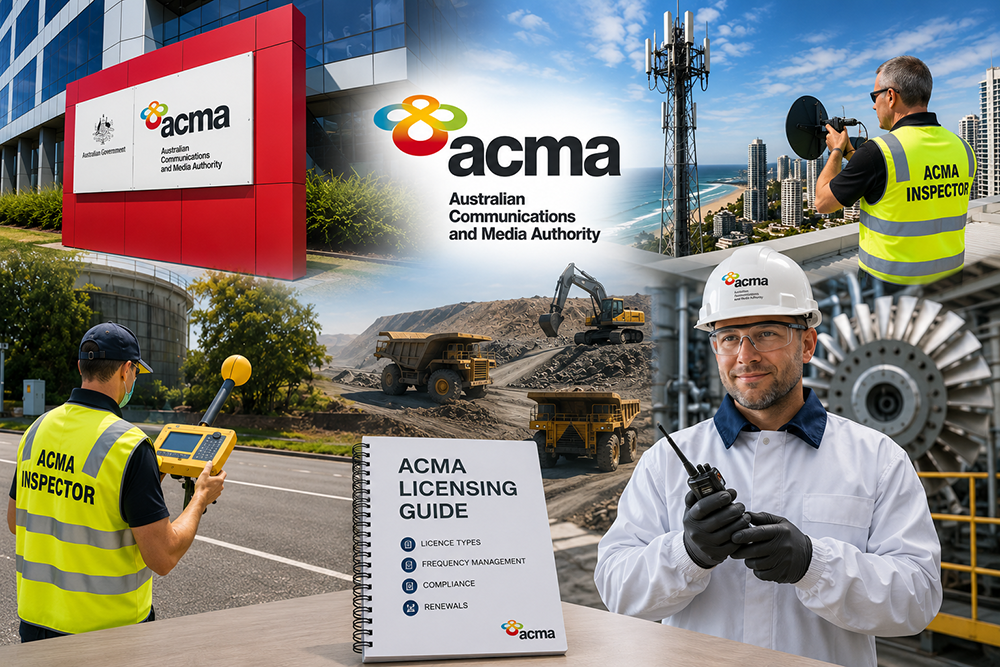
The Australian Communications and Media Authority (ACMA) is the Australian Government’s independent regulator responsible for managing radiofrequency spectrum, telecommunications, broadcasting, radiocommunications, internet services and aspects of online communications across Australia.
One of ACMA’s key responsibilities is ensuring that Australia’s limited radio spectrum is used efficiently, fairly and safely. This includes issuing radio frequency licences, coordinating private business frequencies, managing licence renewals, reducing radio interference and helping maintain reliable communications for businesses, government agencies, emergency services and many other organisations.
If your business operates on a licensed two-way radio frequency, ACMA is the authority responsible for issuing and administering that licence, while ensuring Australia’s radio spectrum remains organised and compliant with national regulations.
Why Does ACMA Licence the Radio Frequencies?
Radio spectrum is a finite resource. Only a limited number of frequencies are available, and many organisations need to use them simultaneously.
Imagine hundreds of businesses all attempting to communicate on exactly the same radio channel. Conversations would overlap, emergency messages could be missed, and communications would quickly become unreliable.
ACMA coordinates radio frequencies across Australia to ensure businesses can operate safely and efficiently. By allocating frequencies based on factors such as location, coverage area, transmitter power and intended use, ACMA helps minimise interference between neighbouring radio systems while making the most efficient use of the available spectrum.
This coordination is particularly important for industries where communication is critical to worker safety, operational efficiency and emergency response.
Does Buying a Two-Way Radio Include the Licence?
One of the biggest misconceptions we encounter is that purchasing professional radios automatically includes the right to operate on any frequency.
Unfortunately, that’s not how radio licensing works.
Buying a two-way radio gives you ownership of the equipment, but it doesn’t automatically grant permission to transmit on a private business frequency. If your system operates on licensed frequencies, your business must also hold a valid ACMA licence that authorises the use of those frequencies.
A simple way to think about it is this:
- The radio is the vehicle.
- The frequency is the road.
- The ACMA licence is your legal permission to drive on that road.
Without the appropriate licence, operating on a licensed frequency is not permitted under Australian regulations, even if the radios themselves are functioning correctly.
Who Typically Needs an ACMA Licence?
Many businesses operating professional radio systems use licensed frequencies because they require reliable, interference-free communications across their worksites or vehicle fleets.
Industries that commonly operate on licensed frequencies include:
- Construction and civil infrastructure
- Mining and resources
- Manufacturing and industrial facilities
- Warehousing and distribution centres
- Transport and logistics companies
- Security providers
- Local councils and utilities
- Airports and aviation support services
- Ports and maritime operations
- Surveying companies using DGPS base stations
- Event and crowd management organisations
- Emergency response and volunteer services
These organisations often depend on instant communication between multiple teams spread across large sites or geographic regions. A dedicated licensed frequency provides greater reliability than shared public channels and helps ensure important messages are delivered without unnecessary interruptions.
What Types of Radio Licences Are Available?
Depending on how your organisation operates, ACMA offers different licensing arrangements to suit various communication requirements.
For example, a manufacturing facility may require a fixed site licence that covers communications within a single factory or warehouse, while a transport company with vehicles travelling across multiple regions may require a broader licence that supports communications over a much larger operating area.
Some specialist applications, such as surveying using Differential GPS (DGPS) base stations, have additional technical requirements and specific licensing conditions based on the equipment and location being used.
The appropriate licence depends on several factors, including:
- Your business location
- Number of operating sites
- Coverage area required
- Type of radio equipment
- Frequency band
- Antenna configuration
- Power output
- Operational requirements
Because every application is different, professional advice can help ensure the most suitable licence is selected before equipment is programmed and deployed.
Types of ACMA Private Frequency Licences
Choosing the Right Licence Coverage for Your Business
When applying for a private business radio frequency, one of the first decisions is determining where your radios need to operate.
Not every business requires Australia-wide coverage. Some organisations only communicate within a single worksite, while others operate across an entire state or throughout the country.
ACMA offers several licensing options depending on your operational requirements and geographic coverage. The most suitable licence depends on where your radios will be used, how long they’ll operate at each location and the type of work your organisation performs.
1. Site-Specific Licence
A Site-Specific Licence is the most common type of private frequency licence used by Australian businesses.
This licence authorises radio communications within a defined location or operating radius, making it ideal for organisations that work from a permanent site.
Typical users include:
- Warehouses
- Manufacturing plants
- Distribution centres
- Shopping centres
- Hospitals
- Schools and universities
- Construction sites
- Industrial facilities
- Local council depots
Site-specific licences provide a dedicated frequency for that location and are generally the most cost-effective option for businesses operating from a single site.
Best suited for: Businesses operating from one fixed location.
2. Statewide Licence
Businesses that regularly operate across an entire state may benefit from a Statewide Licence.
Rather than applying for individual site licences, this licence allows authorised radio communications throughout a nominated Australian state or territory.
Statewide licences are commonly used by:
- Utility providers
- Transport companies
- State government departments
- Infrastructure contractors
- Service technicians
- Emergency support organisations
This option provides greater operational flexibility for organisations whose staff travel extensively within one state.
Best suited for: Organisations working across multiple locations within one state.
3. Nationwide Licence
For businesses operating throughout Australia, a Nationwide Licence allows communications across multiple states and territories under a single licensing arrangement where appropriate.
This type of licence is commonly used by organisations with national operations, including:
- National transport and logistics companies
- Rail operators
- Mining companies
- Utility providers
- Large construction organisations
- National service providers
Because these systems cover a much larger geographic area, frequency planning and coordination are more complex than for site-specific licences.
Best suited for: Organisations with operations across Australia.
4. Australian Waterways Licence
Businesses operating on Australia’s inland waterways or coastal regions may require an Australian Waterways Licence.
These licences are commonly used by organisations involved in:
- Marine construction
- Port operations
- Dredging
- Harbour services
- Commercial vessels
- Water authorities
- Ferry operators
Depending on the equipment and operating environment, marine radio licensing requirements may differ from standard land mobile services.
Best suited for: Businesses operating on rivers, ports, harbours and Australian waterways.
5. Low Density Area Licence
Australia has many remote and regional areas where radio spectrum is less congested.
For businesses operating in these locations, ACMA provides licensing arrangements suitable for low-density spectrum areas.
These licences are commonly used by:
- Mining companies
- Pastoral stations
- Agricultural businesses
- Remote councils
- Exploration companies
- Utility providers
- Regional infrastructure projects
Because there are fewer radio users in these areas, frequency coordination is often less complex than in metropolitan regions.
Best suited for: Remote and regional operations with low spectrum congestion.
6. Government / Harmonised Government Spectrum (HGS)
In addition to standard commercial radio frequency licences, ACMA also manages specialised licensing arrangements for Australian Government, State and Territory Government agencies, local councils, public utilities, health services and certain organisations performing government functions. These licences may include access to Harmonised Government Spectrum (HGS) within the 400 MHz band, which is reserved for critical government communications and managed in consultation with the National Coordinating Committee for Government Radiocommunications (NCCGR). If your organisation operates in the public sector or provides services on behalf of government, additional licensing requirements may apply.
Which Licence Is Right for Your Business?
Choosing the correct licence depends on several factors, including:
- Where your radios will operate
- Number of worksites
- Coverage area required
- Whether vehicles travel between locations
- Duration of the project
- Future business expansion
- Repeater requirements
At Radio Industries, we assess your operational requirements before preparing an ACMA licence application. Our team can recommend the most suitable licence type, coordinate frequency assignments and ensure your communication system complies with current ACMA requirements.
| Licence Type | Coverage Area | Common Users |
|---|---|---|
| Site-Specific | One site or local operating radius | Warehouses, factories, construction sites, schools |
| Statewide | One Australian state or territory | Utilities, transport fleets, contractors, councils |
| Nationwide | Across Australia | National logistics, mining, rail and service providers |
| Australian Waterways | Ports, harbours and inland waterways | Marine operators, ports, ferry services |
| Low Density Area | Regional and remote Australia | Mining, agriculture, exploration, remote utilities |
Why Understanding Licensing Matters
Many businesses don’t think about their radio licence until something goes wrong. That could be receiving an ACMA renewal notice, experiencing unexpected interference, expanding to a new site or discovering that a previously licensed frequency has expired.
Understanding how licensing works from the beginning helps avoid costly disruptions, keeps your communications compliant with Australian regulations and ensures your radio system continues to perform as intended.
Do I Actually Need an ACMA Licence?
Not Every Two-Way Radio Requires a Licence
One of the biggest misconceptions surrounding two-way radios is that every radio requires an ACMA licence. Fortunately, that’s not the case.
Whether you need a licence depends not on the brand of radio, but on the frequencies your radios operate on and how you intend to use them.
For example, a Motorola, Hytera, Icom, Kenwood or GME radio can operate on either licence-free UHF CB channels or private licensed business frequencies, depending on how it has been programmed. Simply purchasing a professional radio doesn’t automatically mean an ACMA licence is required.
Understanding the difference between licence-free and licensed radio systems is one of the most important decisions your business can make.
Licence-Free UHF CB Radios
UHF CB (Citizens Band) radios are Australia’s most common licence-free two-way radios. They operate on the standard 80 UHF CB channels allocated for public use, meaning anyone can legally communicate on these channels without obtaining an ACMA frequency licence.
Because they are simple to use and have no annual licensing fees, UHF CB radios are popular for:
- Small businesses
- Farms and agriculture
- Recreational four-wheel driving
- Camping and outdoor activities
- Caravan travellers
- Small workshops
- Community groups
- Light commercial operations
For businesses with only a few staff working in a relatively small area, licence-free UHF CB radios can provide a practical and cost-effective communication solution.
However, there is one significant limitation.
You’re sharing those channels with everyone else.
The Limitations of UHF CB Channels
Imagine trying to hold an important business meeting in a busy food court. While you can still have a conversation, you’re constantly surrounded by other people talking.
The same applies to licence-free radio channels.
Because they’re open to the public, you may experience:
- Other businesses using the same channel
- Conversations from nearby worksites
- Radio traffic from trucks or construction crews
- Interference from recreational users
- Congested channels during busy periods
- Reduced communication reliability
For businesses where communication is essential to safety, productivity or operational efficiency, these interruptions can quickly become frustrating and costly.
This is one of the main reasons many organisations choose to move to a licensed private frequency.
Licensed Business Radio Systems
Unlike UHF CB radios, licensed business radio systems operate on frequencies that have been coordinated and assigned by ACMA for authorised use.
Rather than sharing channels with the general public, your organisation is allocated a frequency specifically planned to minimise interference from nearby radio users.
This provides significant advantages for businesses that rely on dependable communications throughout the working day.
Licensed systems are commonly used by organisations where clear communication is critical, including:
- Construction and infrastructure projects
- Mining operations
- Warehousing and distribution centres
- Manufacturing facilities
- Transport and logistics companies
- Security organisations
- Local councils
- Airports and ports
- Utility providers
- Event management companies
These industries often coordinate dozens—or even hundreds—of workers, vehicles and contractors across large operational areas. A private frequency helps ensure important messages are received quickly and clearly.
Licence-Free vs Licensed Radios
The table below highlights the key differences between licence-free UHF CB radios and licensed business radio systems.

| Feature | UHF CB (Licence-Free) | Private ACMA Licensed Frequency |
|---|---|---|
| ACMA Licence Required | No | Yes |
| Annual Licence Fees | No | Yes |
| Frequency Access | Shared with everyone | Dedicated business frequency |
| Interference Risk | Higher | Significantly lower |
| Privacy | Limited | Greater operational privacy |
| Best For | Small businesses and recreational use | Commercial and industrial operations |
| Coverage Options | Standard UHF CB limits | Can be expanded with repeaters and engineered systems |
| Reliability | Variable | High |
Do Digital Radios Require an ACMA Licence?
Another common misconception is that digital radios are licence-free because they’re newer technology.
In reality, whether a radio is analogue or digital has nothing to do with licensing.
The determining factor is which frequency the radio operates on.
For example:
- A digital radio operating on UHF CB channels generally does not require an ACMA licence.
- A digital radio programmed to a private business frequency does require an ACMA licence.
- Likewise, an analogue business radio operating on a licensed frequency also requires an ACMA licence.
In other words, it’s the frequency—not the technology—that determines whether licensing is required.
Do Repeaters Require an ACMA Licence?
Yes, in most cases.
A radio repeater is designed to receive and re-transmit radio signals, significantly extending communication range across larger sites or difficult terrain.
Because repeaters transmit continuously on assigned frequencies, they almost always operate under an ACMA-licensed radio system.
Repeaters are commonly installed for:
- Large construction projects
- Open-cut and underground mines
- Multi-building warehouse complexes
- Manufacturing facilities
- Transport depots
- Local government operations
- High-rise developments
If your business requires reliable communications over several kilometres or across multiple buildings, a repeater system may be recommended as part of your licensed radio network.
How Do I Know If My Business Needs a Licence?
Every business is different, but there are a few simple questions that can help determine whether a licensed radio system is likely to be the right choice.
You should consider an ACMA licensed frequency if:
- Your team relies on radios every day for business-critical communication.
- You regularly experience interference on UHF CB channels.
- You need dependable communications across a large site or multiple locations.
- Your operation involves safety-critical tasks where missed messages aren’t acceptable.
- You require improved privacy and reduced congestion.
- You plan to install a repeater or fixed radio infrastructure.
- You want a professionally managed communication system that can grow with your business.
If your organisation only requires occasional communication over short distances and occasional interference isn’t a major concern, licence-free UHF CB radios may be sufficient.
Unsure Whether You Need an ACMA Licence?
Choosing the right radio system isn’t always straightforward, and every business has different operational requirements. Factors such as site size, workforce, coverage area, interference levels and future expansion plans all play a role in determining the most suitable solution.
At Radio Industries, we help businesses assess their communication needs and determine whether a licence-free or licensed radio system is the best fit. If a private frequency is required, we can assist with ACMA licence applications, frequency planning, equipment programming and ongoing compliance support.
Why Businesses Choose Licensed Frequencies
The Benefits of an ACMA Licensed Radio Frequency
For many small businesses, licence-free UHF CB radios provide an affordable and practical way to stay connected. However, as organisations grow, communication becomes more critical to daily operations. More staff, larger worksites, multiple vehicles and increasingly complex workflows place greater demands on a radio system.
This is where a private ACMA licensed frequency offers significant advantages.
Rather than sharing radio channels with the public, a licensed frequency is coordinated specifically for your business, helping to deliver more reliable communications when they matter most. Whether you’re managing a construction project, coordinating transport fleets, overseeing a manufacturing facility or operating across a large mining site, dependable communication directly contributes to safety, productivity and operational efficiency.
Let’s explore why thousands of Australian businesses choose licensed radio systems.
1. More Reliable Communications
Reliability is one of the biggest reasons organisations invest in a licensed radio system.
Unlike licence-free UHF CB channels, where anyone can legally transmit, a private frequency is coordinated by ACMA to minimise interference from nearby radio users.
This means your team is far less likely to experience:
- Unexpected conversations from other businesses
- Busy channels
- Radio congestion
- Interrupted communications
- Repeated messages due to interference
When every second counts, having a clear communication channel allows your workforce to respond quickly and confidently.
2. Reduced Interference
Anyone who has used a UHF CB radio has probably experienced someone else suddenly talking over an important conversation.
This happens because UHF CB channels are shared by everyone, including:
- Construction crews
- Truck drivers
- Farmers
- Recreational four-wheel drivers
- Caravan travellers
- Nearby businesses
A licensed business frequency dramatically reduces the likelihood of this happening.
ACMA carefully coordinates licensed frequencies based on location, operating area and technical requirements, helping ensure neighbouring radio systems do not interfere with one another.
For businesses where communication is essential to daily operations, fewer interruptions mean fewer mistakes and smoother workflows.
3. Improved Workplace Safety
Across many industries, radios are more than just a convenience—they’re an important safety tool.
Workers often rely on instant communication to report hazards, request assistance, coordinate heavy machinery or respond to emergencies.
A reliable licensed frequency helps ensure important messages are transmitted without unnecessary delays caused by channel congestion or interference.
Industries where dependable communications play a critical safety role include:
- Construction and infrastructure
- Mining operations
- Manufacturing plants
- Warehouses
- Transport depots
- Security services
- Utilities
- Local government field crews
When communication systems perform reliably, supervisors can respond faster, workers remain better informed and emergency situations can be managed more effectively.
4. Greater Operational Efficiency
Communication delays often lead to operational delays.
Whether it’s waiting for a forklift, coordinating deliveries, dispatching maintenance staff or directing site vehicles, every interruption costs valuable time.
Licensed radio systems help streamline communication between departments, allowing teams to:
- Coordinate work more efficiently
- Respond to equipment faults faster
- Reduce unnecessary travel across site
- Minimise production delays
- Improve workflow between supervisors and field staff
Even small improvements in communication can have a measurable impact on productivity over time.
5. Better Coverage Across Large Sites
Many businesses quickly outgrow the coverage limitations of standard licence-free radios.
Large warehouses, processing plants, high-rise developments, mining operations and transport depots often require communications over several kilometres or through multiple buildings.
Licensed radio systems can be engineered to suit these environments using infrastructure such as:
- Fixed base stations
- High-gain antennas
- Radio repeaters
- Multi-site linked systems
- Digital trunked networks
These solutions provide more consistent coverage across large operational areas while maintaining clear communications.
6. A Professional Communication System That Grows with Your Business
As businesses expand, communication requirements often become more complex.
What begins as a handful of handheld radios may eventually grow into a complete communication network involving:
- Portable radios
- Vehicle-mounted mobile radios
- Control room base stations
- Dispatch consoles
- GPS fleet tracking
- Lone worker features
- Emergency call functions
- Nationwide Push-to-Talk over Cellular (PoC) integration
A licensed radio system provides the foundation for future expansion, allowing organisations to scale their communications as operational needs change.
7. Greater Control Over Your Communications
One advantage that is often overlooked is having greater control over how your communication system operates.
With a professionally managed licensed system, your business has the flexibility to tailor communications to suit specific operational requirements.
This may include:
- Separate channels for different departments
- Dedicated maintenance channels
- Emergency communication groups
- Vehicle and fleet communications
- Contractor coordination
- Site-specific radio programming
This level of flexibility allows organisations to manage communications more efficiently than would typically be possible on shared public channels.
Which Industries Benefit Most from Licensed Frequencies?
While almost any business can benefit from reliable radio communications, licensed frequencies are particularly valuable for organisations where communication is essential to daily operations.
Industries that commonly use licensed radio systems include:
- Construction and infrastructure
- Mining and resources
- Manufacturing
- Warehousing and distribution
- Transport and logistics
- Security services
- Local government
- Utilities
- Airports and ports
- Hospitals and healthcare
- Education campuses
- Event and crowd management
- Agriculture and large farming operations
- Surveying and engineering
Each of these industries relies on fast, dependable communication to improve safety, coordinate teams and maintain efficient operations.
Is a Licensed Frequency Always the Right Choice?
Not necessarily.
For very small businesses or occasional users operating within a limited area, licence-free UHF CB radios may provide everything they need.
However, if your organisation relies on radios throughout the day, regularly experiences interference or requires dependable communications across a larger site, investing in a licensed radio system is often a worthwhile long-term decision.
Choosing the right solution depends on your operational requirements, workforce size, coverage area and future growth plans.
How ACMA Allocates Radio Frequencies
How Does ACMA Decide Which Frequency Your Business Can Use?
One of the most common questions we hear is:
“Can I just choose my own radio frequency?”
The short answer is no.
Unlike licence-free UHF CB channels, where anyone can use the available channels, private business frequencies are carefully managed by the Australian Communications and Media Authority (ACMA). This ensures thousands of organisations across Australia can operate their radio systems without causing interference to one another.
When you apply for an ACMA radio frequency licence, your application isn’t simply approved with the next available channel. Instead, ACMA undertakes a technical assessment to determine the most appropriate frequency for your business based on several operational and engineering factors.
The goal is simple: provide reliable communications while preventing interference between neighbouring radio users.
Why Can’t Every Business Use the Same Frequency?
Radio spectrum is a limited resource.
If every construction company, warehouse, transport operator and security business in the same suburb transmitted on exactly the same frequency, communications would quickly become unusable.
Messages would overlap.
Workers would hear conversations from unrelated businesses.
Emergency calls could be blocked.
Critical instructions might be missed.
To avoid this, ACMA coordinates frequency assignments across Australia, separating users wherever possible through careful planning and engineering.
This coordination allows multiple organisations to operate radio systems within the same city—or even on neighbouring industrial estates—without disrupting one another.
What Factors Does ACMA Consider?
Every licence application is assessed individually.
Depending on the type of operation, ACMA considers a range of technical and operational factors before assigning a frequency.
These commonly include:
Business Location
The physical location of your site is one of the most important factors.
A frequency suitable for a warehouse in regional New South Wales may already be heavily used in metropolitan Sydney.
Coverage Area Required
How far do your radios need to communicate?
A single warehouse may only require coverage across a few hundred metres, while a mining operation could require reliable communications across many kilometres.
The larger the required coverage area, the more detailed the frequency planning becomes.
Type of Operation
Different industries have different communication requirements.
For example:
- Construction sites
- Mining operations
- Manufacturing facilities
- Transport fleets
- Local councils
- Utilities
- Security providers
Each may require different technical solutions depending on how and where radios will be used.
Radio Equipment
The equipment being installed also influences frequency planning.
This includes:
- Handheld portable radios
- Vehicle-mounted mobile radios
- Base stations
- Radio repeaters
- Control room equipment
Each type of equipment has different operating characteristics that ACMA considers during the application process.
Antenna Height
Higher antennas increase radio coverage.
While this can improve communications for your business, it also increases the distance your signal can travel.
For this reason, antenna height plays an important role in ensuring nearby radio systems aren’t affected.
Transmitter Power
More transmission power isn’t always better.
Higher-powered transmitters provide greater coverage but also increase the likelihood of affecting other licensed users if frequencies aren’t carefully coordinated.
ACMA determines appropriate operating conditions to balance coverage with spectrum efficiency.
Existing Radio Systems Nearby
Before assigning a new frequency, ACMA considers existing licensed radio services already operating in the surrounding area.
This helps prevent two neighbouring organisations from unintentionally transmitting over each other.
In busy metropolitan areas where many businesses rely on professional radio systems, frequency coordination becomes especially important.
Can Two Businesses Have the Same Frequency?
Yes—but not always in the way many people think.
If two businesses operate hundreds of kilometres apart, it’s often possible for both to use the same frequency because their radio signals will never reach each other.
This is known as frequency reuse, and it’s one of the ways ACMA makes efficient use of Australia’s limited radio spectrum.
However, if two businesses are located close together, assigning the same frequency could result in interference.
In these situations, ACMA will normally allocate different frequencies or apply technical conditions to ensure both systems operate reliably.
Why Might My Neighbour Have a Different Frequency?
It’s common for two businesses operating side by side to have completely different frequencies.
Even if both companies use similar radio equipment, factors such as:
- Different coverage requirements
- Different antenna heights
- Different operating hours
- Existing licensed services
- Repeater installations
can all influence which frequency ACMA assigns.
This is why frequencies can’t simply be copied from one business to another.
Every licence application is assessed on its own technical merits.
Can I Choose My Own Frequency?
In most cases, businesses cannot simply request any frequency they like.
If a preferred frequency is already allocated nearby, assigning it again could create significant interference.
Instead, ACMA assesses available spectrum and allocates the most appropriate frequency for your operational requirements.
If your business already has an existing licensed frequency and the licence remains active, that frequency can usually continue to be used as long as the licence is renewed on time. However, once a licence expires and the frequency is reassigned to another organisation, there is no guarantee it will be available again.
What If My Business Moves to a New Site?
Relocating your operations can affect your radio licence.
A frequency that works well at one location may not be suitable at another due to nearby radio users or different spectrum availability.
If your business relocates, expands to additional sites or significantly changes its communication requirements, your licence may need to be reviewed and, in some cases, a new frequency application may be required.
This is one reason it’s important to discuss site changes with your radio provider before moving equipment.
Why Professional Frequency Planning Matters
Frequency planning is far more than simply assigning a channel number.
A properly engineered radio system considers your:
- Current operational requirements
- Site layout
- Coverage expectations
- Workforce size
- Future expansion plans
- Regulatory compliance
Choosing the right frequency from the outset helps minimise interference, improves communication reliability and reduces the likelihood of costly changes later.
At Radio Industries, we work closely with businesses across Australia to assist with ACMA licence applications, frequency planning and system design. By understanding your operational needs before submitting an application, we help ensure your communication system is built on a reliable foundation from day one.
ACMA Licence Renewal Explained
Why Renewing Your ACMA Licence Is Critical
For many businesses, purchasing a professional two-way radio system is seen as a one-time investment. The radios are programmed, installed and put into daily use, often operating reliably for many years.
What many organisations don’t realise, however, is that owning the radios and holding the legal authority to use the assigned frequency are two separate things.
While your radios remain your property, your right to transmit on a licensed business frequency depends on maintaining a valid ACMA radio frequency licence. If that licence isn’t renewed before it expires, your legal authority to operate on that frequency ends—even though the radios themselves continue to function.
Unfortunately, this misunderstanding is one of the most common reasons businesses experience unexpected licensing issues. At Radio Industries, we regularly receive calls from customers who have only discovered their licence has expired after experiencing interference, receiving an enquiry from ACMA, or attempting to upgrade or expand their communication system.
Understanding how the renewal process works can help your business avoid unnecessary downtime, additional costs and regulatory issues.
Do ACMA Radio Frequency Licences Need to Be Renewed?
Yes.
Private business radio frequency licences issued by ACMA have an expiry date and must be renewed to maintain legal operation.
Unlike purchasing equipment outright, the licence is an ongoing authorisation that allows your business to continue using its allocated radio frequency.
As long as the licence remains active and renewal fees are paid before the expiry date, your business can continue operating on its assigned frequency without interruption.
Who Is Responsible for Renewing the Licence?
One of the most common misconceptions is that the radio supplier or installer automatically renews the licence each year.
In most cases, the responsibility rests with the licence holder.
When the licence was originally applied for, ACMA recorded the nominated licence holder and the contact details provided during the application process. Renewal notices and invoices are then issued directly to that contact.
Even if your radio provider assisted with the original application, the ongoing responsibility for renewing the licence remains with the organisation listed as the licence holder.
How Does the ACMA Renewal Process Work?
The renewal process is generally straightforward.
Before your licence reaches its expiry date, ACMA sends a renewal notice and invoice to the email address recorded against the licence.
The licence holder simply needs to:
- Review the renewal notice.
- Pay the invoice before the due date.
- Keep their contact details up to date.
Once payment has been processed, the licence remains active for the next licensing period, allowing your business to continue using its allocated frequency.
Although the process is relatively simple, problems often occur when renewal notices never reach the right person.
Why Do Businesses Miss Renewal Notices?
One of the biggest reasons licences expire unexpectedly is because the original contact person is no longer with the business.
For example:
- The employee who organised the original licence has left the company.
- The business has changed email providers.
- The administration team has changed.
- Renewal emails are sent to an unattended inbox.
- Accounts staff are unaware that an ACMA invoice requires payment.
Because ACMA sends renewal notices to the contact email recorded on the licence, outdated information can easily result in reminders being missed.
Best Practice: Use a Shared Company Email Address
Rather than using an individual employee’s email address, businesses are strongly encouraged to nominate a shared company email, such as:
Using a shared inbox ensures that renewal notices remain accessible even if staff members leave or internal responsibilities change.
It’s a simple step that can prevent significant disruption in the future.
Keep Your Licence Details Up to Date
Your contact information should be reviewed regularly to ensure ACMA has the correct details on file.
If your business changes:
- Company name
- Contact person
- Email address
- Postal address
- Site location
it’s important to update the relevant licence information while the licence is still active.
Waiting until after the licence has expired may complicate the process and could require a completely new application, depending on the circumstances.
How Can I Check When My Licence Expires?
Many businesses don’t know when their licence expires until they receive a renewal invoice.
Fortunately, checking your licence status is straightforward.
You can search the ACMA Register of Radiocommunications Licences using:
- Licence number
- Business name
- Licence holder details
The register displays whether the licence is active, along with its expiry date and other licence information.
Checking your licence annually is a simple way to ensure there are no surprises.
Simple Ways to Avoid Licence Expiry
Maintaining an active licence doesn’t require much effort, but a few simple habits can prevent expensive problems later.
We recommend every business:
- Use a shared Accounts or Administration email for ACMA correspondence.
- Set calendar reminders at least 30 days before licence expiry.
- Review licence records annually.
- Ensure ACMA invoices are processed promptly.
- Notify ACMA if your contact details change.
- Speak with your radio provider before relocating or expanding your radio system.
These simple administrative steps can save your business significant time, expense and operational disruption.
What Happens If I Forget to Renew?
Missing a renewal deadline can have serious consequences.
Once a licence expires, your business may lose the legal authority to operate on its allocated frequency. Depending on how long the licence has lapsed, ACMA may also reassign that frequency to another organisation.
If this occurs, you may need to submit a new application, be allocated a different frequency and have every radio in your fleet reprogrammed before they can be used legally again.
Need Help Managing Your ACMA Licence?
Whether you’re unsure when your licence expires, need assistance checking your licence status, or want help with a renewal, Radio Industries can guide you through the process.
Our team regularly assists Australian businesses with:
- ACMA licence renewals
- Licence status checks
- Updating licence contact details
- New licence applications
- Frequency reapplications
- Radio reprogramming
- Ongoing compliance support
By staying on top of your licence renewals, you can keep your communications running smoothly and avoid the unnecessary costs and disruption that come with an expired frequency.
What Happens If Your ACMA Licence Expires?
Understanding the Risks of an Expired Radio Frequency Licence
One of the most common—and most important—questions businesses ask is:
“What happens if our ACMA licence expires?”
Many people assume that because their radios continue to switch on and transmit, everything is fine.
Unfortunately, that’s not the case.
When an ACMA radio frequency licence expires, it’s not the radio equipment that becomes invalid—it’s your legal authority to use the licensed frequency. While the radios themselves may continue to operate, your organisation is no longer authorised to transmit on that frequency under Australian regulations.
Depending on how long the licence has been expired, the consequences can range from a simple renewal through to losing the frequency altogether and having to reprogram every radio in your fleet.
What Happens the Day My Licence Expires?
Once your licence reaches its expiry date and is not renewed, several things happen.
Your organisation:
- No longer has legal permission to operate on the licensed frequency.
- Risks having the frequency reassigned to another organisation.
- May need to submit a completely new licence application.
- Could be required to reprogram every radio if a new frequency is allocated.
This is why renewing your licence before the expiry date is always the safest and most cost-effective option.
Can I Still Use My Radios After the Licence Expires?
This is probably the question we hear most often.
Technically…
Yes.
Your radios don’t suddenly stop working at midnight on the expiry date.
If you press the Push-to-Talk (PTT) button, the radios may still transmit exactly as they did the day before.
Legally…
No.
Once the licence has expired, operating on that licensed frequency is no longer authorised.
A simple way to understand this is to compare it to driving a car.
Your vehicle doesn’t stop working simply because its registration has expired. It will still drive exactly the same.
However, driving an unregistered vehicle on public roads is illegal.
The same principle applies to licensed radio frequencies.
Your radios may still function, but using them without a valid ACMA licence places your business in breach of Australian radiocommunications regulations.
What Are the Risks of Using an Expired Frequency?
Continuing to operate on an expired frequency exposes your organisation to several risks.
1. Loss of Legal Authority
The most immediate consequence is that your business no longer has permission to use the frequency.
2. Increased Risk of Interference
Once your licence expires, ACMA may eventually allocate that same frequency to another organisation.
If both businesses begin transmitting on the same frequency, communications may become unreliable.
This can result in:
- Interrupted conversations
- Missed instructions
- Radio congestion
- Operational delays
- Safety concerns
3. Regulatory Action
Operating without a valid licence may lead to investigation by ACMA.
Potential outcomes can include:
- Compliance investigations
- Regulatory fines
- Enforcement action
- Equipment seizure in serious circumstances
These risks increase if interference is caused to another licensed radio user.
Can I Simply Renew My Licence After It Expires?
Sometimes—but not always.
If the licence has only recently expired, ACMA may allow the renewal process to continue.
However, once sufficient time has passed, the licence generally cannot simply be renewed.
Instead, your business will usually need to:
- Submit a new application.
- Undergo frequency coordination again.
- Wait for ACMA approval.
- Receive a new frequency if the previous one is no longer available.
The longer a licence remains expired, the greater the likelihood that your original frequency will have been allocated elsewhere.
What If Someone Else Gets My Old Frequency?
This is one of the biggest concerns for businesses.
Unfortunately, once a licence has expired, there is no guarantee that your original frequency will still be available.
If ACMA reallocates it to another organisation, your business loses the right to continue using that frequency.
ACMA will instead assign a new frequency that better suits current spectrum availability.
While this keeps your business operating legally, it also means additional work.
Will My Radios Need Reprogramming?
Yes.
If your business is allocated a different frequency, every radio using the previous frequency must be updated.
This commonly includes:
- Handheld radios
- Vehicle-mounted mobile radios
- Base stations
- Repeaters
- Dispatch consoles
- Fixed control room equipment
Until every device is programmed with the new frequency, your communication system will not operate correctly.
For organisations with dozens—or even hundreds—of radios, reprogramming can become a significant project.
How Long Does It Take to Get a New Frequency?
If a completely new licence application is required, approval generally takes between two and four weeks, depending on ACMA processing times and the complexity of the application.
Businesses planning:
- New facilities
- Site relocations
- Major upgrades
- Fleet expansions
should allow adequate time for licensing before the system is required.
How Does ACMA Know if I’m Using an Expired Frequency?
A surprisingly common question is:
“How likely is it that ACMA will find out?”
There are several ways unlicensed operation can be identified.
Interference Complaints
If your expired frequency has been reassigned to another organisation, both users may begin experiencing interference.
The licensed user is likely to report the issue to ACMA.
Radio Frequency Detection Equipment
ACMA inspectors have specialised radio frequency monitoring equipment capable of locating unauthorised transmissions.
If interference is reported, inspectors can investigate and identify the source of the signal.
Compliance Inspections
In addition to investigating complaints, ACMA also conducts compliance activities to help ensure licensed radio systems are operating within Australian regulations.
This means detection does not always rely on another business lodging a complaint.
Real-World Example
Imagine your warehouse has been using the same private frequency for more than ten years.
The employee who originally arranged the licence has since retired, and renewal notices have been sent to an email address that is no longer monitored.
The licence quietly expires.
Several months later, ACMA assigns that frequency to another warehouse located nearby.
Suddenly:
- Both businesses hear each other’s conversations.
- Staff complain about constant interference.
- Communication becomes unreliable.
- The newly licensed business reports the issue.
- ACMA investigates.
Your business now needs to stop using the frequency, submit a new application and reprogram every radio.
What could have been avoided with a simple licence renewal has now become an expensive and disruptive project.
How Can You Avoid This Situation?
Fortunately, avoiding licence expiry is relatively simple.
We recommend every business:
- Keep licence contact details up to date.
- Use a shared Accounts or Administration email.
- Set renewal reminders at least 30 days before expiry.
- Pay ACMA renewal invoices promptly.
- Periodically check licence status through ACMA.
- Contact your radio provider if you’re unsure about your licence status.
A few minutes of administration each year can prevent weeks of disruption later.
Radio Industries Can Help
If you’re unsure whether your licence is still active, don’t wait until communication problems occur.
Radio Industries can assist with:
- Checking licence status
- Licence renewals
- New ACMA licence applications
- Frequency reapplications
- Radio reprogramming
- Updating licence contact details
- Compliance advice
Our team regularly helps businesses recover from expired licences and, more importantly, helps prevent them from expiring in the first place.
ACMA Compliance, Enforcement and Radio Interference
How Does ACMA Monitor Radio Frequency Compliance?
A common question we hear from businesses is:
“If our licence expires, how would ACMA know we’re still using the radios?”
It’s understandable why people ask.
Unlike a vehicle registration, there’s no sticker on your radio showing whether the licence is current. Your radios will often continue transmitting exactly as they did before the licence expired.
However, Australia’s radio spectrum is carefully managed, and ACMA has several ways of identifying unlicensed radio transmissions and investigating interference complaints. While many businesses may never experience an inspection, maintaining compliance is essential because radio communications often support safety-critical operations where interference can have serious consequences.
Why Does ACMA Regulate Radio Frequencies?
Australia’s radio spectrum is shared by thousands of organisations every day.
These include:
- Emergency services
- Police
- Fire and rescue
- Ambulance services
- Airports
- Maritime operators
- Mining companies
- Construction firms
- Utilities
- Transport operators
- Security companies
- Local councils
- Manufacturers
- Commercial businesses
Without regulation, multiple users could unknowingly transmit on the same frequency, resulting in unreliable communications and potentially serious safety risks.
ACMA’s role is to ensure radio frequencies are used efficiently, fairly and in accordance with Australian radiocommunications legislation.
By coordinating frequency allocations and monitoring compliance, ACMA helps keep Australia’s radio communications reliable for everyone.
What Is Radio Interference?
Radio interference occurs when one radio transmission disrupts another.
This may result in:
- Broken conversations
- Distorted audio
- Unwanted voices
- Missed instructions
- Reduced coverage
- Blocked transmissions
- Poor audio quality
In many workplaces, even a brief communication failure can affect productivity or worker safety.
Imagine a crane operator missing an instruction, a forklift driver not hearing a warning, or a security officer being unable to communicate during an emergency. Reliable radio communications are often critical to safe and efficient operations.
How Can Interference Occur?
Interference can happen for several reasons.
Shared UHF CB Channels
Because UHF CB channels are available for public use, multiple users often share the same channel.
During busy periods, this can lead to:
- Overlapping conversations
- Busy channels
- Interrupted transmissions
- Reduced communication quality
Expired Frequency Licences
One of the most common causes of interference involving licensed systems occurs after a licence has expired.
Once an expired frequency is reassigned by ACMA, two separate organisations may unknowingly attempt to use the same frequency.
This typically results in both users experiencing communication problems until the issue is investigated.
Incorrectly Programmed Radios
If radios have been programmed with incorrect frequencies or outdated channel information, they may interfere with authorised radio users.
This often occurs after:
- Site relocations
- Frequency changes
- Equipment upgrades
- Replacement radios being programmed incorrectly
Regular maintenance and professional programming help minimise these risks.
Faulty Equipment
Damaged antennas, faulty repeaters or malfunctioning radio equipment can also create unwanted transmissions that interfere with nearby systems.
Routine servicing helps identify these problems before they affect operations.
How Does ACMA Investigate Interference?
When interference is reported, ACMA has several methods available to determine the cause.
Investigation Following a Complaint
If a licensed radio user begins experiencing unexpected interference, they may report the issue to ACMA.
ACMA can then investigate whether another organisation is operating unlawfully or causing harmful interference.
Radio Frequency Detection Equipment
ACMA inspectors have specialised radio frequency monitoring equipment capable of locating radio transmissions.
Using direction-finding technology and spectrum monitoring equipment, inspectors can identify the source of an interfering transmission and determine whether the operation complies with licence conditions.
Compliance Activities
In addition to responding to complaints, ACMA conducts compliance activities to help ensure radio systems are operating within Australian regulations.
This means that businesses should not assume they will only be investigated if another organisation reports interference.
What Happens If My Business Is Found Operating Without a Valid Licence?
If ACMA determines that a business is operating on a licensed frequency without the appropriate authorisation, several outcomes are possible depending on the circumstances.
These may include:
- Compliance warnings
- Formal investigations
- Regulatory action
- Financial penalties
- Directions to cease operating
- Equipment confiscation in serious cases
The exact response depends on factors such as the nature of the breach, whether harmful interference has occurred and whether the organisation has taken steps to rectify the situation.
For businesses, the reputational and operational impacts can often be just as significant as the financial consequences.
Why Compliance Is About More Than Avoiding Fines
Some organisations assume compliance is simply about avoiding penalties.
In reality, maintaining a valid licence provides much broader benefits.
A compliant radio system helps ensure:
- Reliable day-to-day communications
- Reduced interference
- Safer workplaces
- Better emergency response
- Consistent operational performance
- Long-term business continuity
For many industries, dependable communications are an essential part of managing workplace safety and coordinating critical operations.
What Should You Do If You’re Experiencing Interference?
If your team suddenly begins hearing unfamiliar voices, experiencing poor audio quality or noticing unreliable communications, don’t assume the radios are faulty.
The issue may be related to:
- Frequency interference
- Licence expiry
- Equipment faults
- Incorrect programming
- Repeater problems
- Changes to nearby radio systems
Rather than attempting to change frequencies yourself, it’s best to have the system professionally assessed.
A radio communications specialist can identify the cause and recommend the appropriate solution.
How Radio Industries Can Help
Radio Industries provides comprehensive support for businesses experiencing radio frequency or licensing issues.
Our team can assist with:
- Radio interference investigations
- ACMA licence checks
- Frequency coordination advice
- Licence renewals
- New frequency applications
- Radio programming and reprogramming
- System testing and optimisation
- Ongoing compliance support
Whether you’re installing a new communication system or troubleshooting an existing one, our goal is to help your business maintain reliable, compliant and interference-free communications.
Stay Compliant, Stay Connected
Maintaining compliance isn’t just about meeting regulatory requirements—it’s about protecting the reliability of your communication system and ensuring your team can communicate clearly when it matters most.
By keeping your ACMA licence current, maintaining properly programmed equipment and seeking professional advice when changes are required, your business can minimise disruptions and continue operating with confidence.
How Much Does an ACMA Radio Frequency Licence Cost?
Understanding the Costs of a Private Radio Frequency Licence
One of the first questions businesses ask when considering a licensed radio system is:
“How much does an ACMA radio frequency licence cost?”
The honest answer is:
It depends.
Unlike purchasing a two-way radio, where pricing is usually fixed, ACMA licence fees vary depending on several technical and operational factors. Every licence application is assessed individually, and the cost is calculated based on the specific communication requirements of your business.
The good news is that, for most organisations, the annual cost of maintaining a private licensed frequency is relatively small when compared with the operational benefits of reliable, interference-free communications.
There Is No Standard ACMA Licence Fee
Many people search online expecting to find a single licence price.
Unfortunately, there isn’t one.
ACMA calculates licence fees using a number of technical criteria rather than applying a flat rate to every business.
The fee depends on factors such as:
- Frequency band
- Licence type
- Operating location
- Coverage area
- Bandwidth
- Number of transmitters
- Base stations or repeaters
- Technical coordination requirements
Because every business has different communication needs, two organisations operating similar radios may pay different licence fees.
What Costs Should Businesses Expect?
When establishing a licensed radio system, there are generally several costs involved.
1. ACMA Application Fee
If you’re applying for a new frequency, ACMA charges an application fee for assessing and processing the licence.
This covers activities such as:
- Frequency coordination
- Technical assessment
- Spectrum allocation
- Licence administration
2. Annual Licence Fee
Once your licence has been issued, you’ll generally pay an annual licence fee to maintain your legal authority to operate on the allocated frequency.
As long as this fee is paid before the licence expires, your business can continue operating on the assigned frequency without interruption.
3. Radio Programming
After a frequency has been approved, every radio must be programmed with the correct operating frequencies.
Depending on your system, this may include:
- Portable radios
- Vehicle-mounted mobile radios
- Base stations
- Repeaters
- Dispatch consoles
Programming ensures every device communicates correctly using the authorised frequency.
4. Installation Costs
If your communication system includes infrastructure such as:
- Repeaters
- Base stations
- External antennas
- Towers
- Control room equipment
installation costs may also apply.
These vary depending on the complexity of the system.
5. Future System Changes
As businesses grow, communication systems often expand.
Future costs may include:
- Additional radios
- New operating sites
- Frequency changes
- Coverage upgrades
- Repeater expansion
- Radio reprogramming
Planning for future growth during the initial design stage can often reduce costs later.
What Factors Affect Licence Costs?
Several technical factors influence the overall cost of an ACMA licence.
Coverage Area
Generally, larger coverage areas require more complex frequency coordination.
For example:
- A single warehouse usually requires less coverage than a statewide transport fleet.
- A local construction project differs significantly from a mining operation spanning several kilometres.
Operating Location
Frequency availability varies throughout Australia.
Major metropolitan areas often have significantly higher spectrum usage than regional or remote locations, making coordination more complex.
Radio Infrastructure
Businesses operating only handheld radios typically have different licensing requirements compared with organisations using:
- Fixed base stations
- High-powered transmitters
- Repeaters
- Multi-site networks
Additional infrastructure may require additional coordination.
Frequency Band
Different sections of the radio spectrum are managed differently.
The frequency band selected for your system may influence both technical requirements and licence fees.
Number of Sites
Businesses operating from multiple locations may require additional licensing considerations depending on:
- Distance between sites
- Coverage overlap
- Shared infrastructure
- Operational requirements
Is a Licensed Frequency Worth the Cost?
For businesses relying on radio communications every day, the answer is usually yes.
The cost of a licensed frequency is often very small when compared with the potential cost of communication failures.
Reliable communications can help reduce:
- Operational delays
- Downtime
- Missed deliveries
- Safety incidents
- Production interruptions
- Contractor coordination issues
- Lost productivity
For many organisations, improved efficiency alone can easily outweigh the annual licensing cost.
The Hidden Cost of Licence Expiry
Some businesses only think about licensing costs when the annual renewal invoice arrives.
However, allowing a licence to expire can become far more expensive than renewing it on time.
If your original frequency has already been allocated to another organisation, your business may need to:
- Submit a completely new licence application.
- Pay a new application fee.
- Wait for ACMA approval.
- Reprogram every radio.
- Update base stations and repeaters.
- Potentially experience operational downtime.
In many cases, these costs significantly exceed the annual renewal fee that could have prevented the problem in the first place.
How Can Radio Industries Help?
Understanding licensing costs can be confusing, particularly for businesses applying for a private frequency for the first time.
At Radio Industries, we help organisations across Australia understand exactly what is required before an application is submitted.
Our team can assist with:
- New ACMA licence applications
- Licence renewals
- Frequency planning
- System design
- Coverage advice
- Radio programming
- Reprogramming following frequency changes
- Ongoing licensing support
Rather than navigating the licensing process alone, we’ll guide you through each step and explain the costs involved, helping you choose a communication solution that suits both your operational requirements and your budget.
Investing in Reliable Business Communications
While no business enjoys ongoing administrative costs, an ACMA licence should be viewed as an investment in the reliability of your communication system rather than simply another annual expense.
A professionally coordinated licensed frequency helps minimise interference, improves operational efficiency, supports workplace safety and provides the dependable communications that modern businesses rely on every day.
Government, Public Sector and Harmonised Government Spectrum (HGS)
Understanding Government Radio Frequency Licensing in Australia
While most Australian businesses operate on standard private radio frequencies, government agencies and organisations supporting government services may be eligible to operate within Harmonised Government Spectrum (HGS).
HGS is a dedicated section of the 400 MHz radio band reserved primarily for Australian Government, State and Territory Government organisations, as well as agencies performing essential public safety, emergency response and government support functions. The spectrum was established to improve coordination, increase spectrum efficiency and provide reliable communications for critical government operations.
Unlike standard commercial frequencies, access to HGS is carefully managed through both the Australian Communications and Media Authority (ACMA) and the National Coordinating Committee for Government Radiocommunications (NCCGR).
What Is Harmonised Government Spectrum (HGS)?
Harmonised Government Spectrum is a collection of dedicated frequency segments within the 400 MHz band that have been reserved for government-related communications.
The primary objectives of HGS are to:
- Support national security
- Improve public safety communications
- Provide reliable communications for emergency services
- Improve spectrum efficiency
- Standardise government communications across Australia
- Reduce congestion within the 400 MHz band
Before an HGS frequency can be assigned, applicants are generally required to consult with their relevant NCCGR representative. The NCCGR assesses the applicant’s classification and whether the proposed service should operate within HGS before ACMA considers the licence application.
Who Can Use HGS?
Many people assume HGS is only available to police or emergency services.
In reality, eligibility depends on the organisation’s role and the services it provides.
The NCCGR classifies users into several categories.
Tier 1
Tier 1 generally includes organisations performing frontline public safety functions.
Examples include:
- Police
- Fire and Rescue
- Ambulance services
- Emergency response organisations
Some non-government organisations performing equivalent frontline emergency services may also be classified as Tier 1.
Tier 2
Tier 2 generally includes government organisations providing direct operational support.
Examples include:
- Government utilities
- Water authorities
- Infrastructure services
- Essential government operational services
Tier 3
Tier 3 generally includes other government services such as:
- Public health services
- Government departments
- Administrative government agencies
Can Non-Government Organisations Use HGS?
Yes—in some circumstances.
Certain non-government organisations may be authorised to operate within HGS where they provide services on behalf of government or perform functions that support government operations.
Examples may include:
- Contracted emergency service providers
- Privatised utilities
- Public health providers
- Government contractors
Each application is individually assessed, and eligibility is determined through the NCCGR consultation process before a licence application proceeds.
What About Local Councils?
This often surprises people.
Local Government organisations are not automatically classified as government users for HGS purposes.
However, councils may still be allocated HGS where appropriate following consultation and approval through the NCCGR process.
Councils commonly use two-way radios for:
- Parks and gardens
- Civil works
- Waste management
- Water operations
- Road maintenance
- Emergency management
- Community facilities
What About Public Hospitals and Health Services?
Hospitals rely heavily on dependable communications for:
- Security teams
- Engineering departments
- Maintenance crews
- Emergency response
- Facilities management
- Patient transport
- Incident coordination
Government-operated health services may qualify for HGS depending on their classification, while some non-government or privatised health providers may also be considered through the NCCGR assessment process.
Do Schools and Universities Use Licensed Frequencies?
Yes.
Many educational institutions use licensed radio systems for:
- Security
- Maintenance
- Grounds staff
- Facilities management
- Emergency response
- Large campus operations
Most schools, universities and TAFEs operate on standard ACMA land mobile licences rather than HGS, although government-operated institutions may have additional licensing considerations depending on the organisation and its operational requirements.
Government Contractors
Many private companies work directly for government departments.
Examples include:
- Road construction contractors
- Defence contractors
- Utilities contractors
- Infrastructure maintenance companies
- Emergency service suppliers
- Rail maintenance organisations
Depending on the project, some contractors may require access to government communications or frequencies.
Radio Industries regularly assists organisations working with government agencies to determine the most appropriate licensing solution before equipment is deployed.
How Is HGS Assigned?
Unlike a standard commercial frequency application, HGS involves an additional consultation process.
The general process is:
- Determine whether the organisation is eligible for HGS.
- Consult with the relevant NCCGR representative.
- Receive advice on the appropriate HGS segment.
- Submit the ACMA licence application with the NCCGR recommendation.
- ACMA assesses the application and issues the licence if approved.
Radio Industries Can Assist Government Organisations
Whether you’re a government department, local council, public health service, educational institution or contractor supporting government operations, Radio Industries can assist with:
- Government radio system design
- ACMA licence applications
- HGS application support
- Frequency planning
- Radio programming
- Fleet upgrades
- System expansion
- Compliance advice
Our experience across government, education, healthcare, utilities and critical infrastructure helps ensure communication systems are designed to meet both operational requirements and regulatory obligations.
Special Licensing Considerations for Different Industries
Not Every Business Has the Same Licensing Requirements
While the basic principles of ACMA radio frequency licensing remain the same, not every business operates in the same environment. A single warehouse has very different communication needs to a mining operation spanning hundreds of hectares, a transport company travelling across state borders or a surveying business using specialised positioning equipment.
Factors such as site size, geographic coverage, mobility, infrastructure, operating duration and even the location within Australia can all influence the type of licence required and how a radio system is designed.
Understanding these industry-specific requirements helps ensure your communication system remains compliant, reliable and capable of supporting your day-to-day operations.
Construction and Infrastructure
Construction projects are constantly evolving. New buildings are erected, contractors move between sites, temporary offices are established, and communication requirements often change throughout the life of a project.
Reliable two-way radio communication enables construction teams to coordinate:
- Site supervisors
- Crane operators
- Traffic controllers
- Plant operators
- Safety officers
- Contractors
- Delivery vehicles
Depending on the project size, organisations may use portable radios, vehicle-mounted radios, base stations and repeaters to provide complete site coverage.
For temporary projects, businesses should consider licensing requirements well before construction begins to allow sufficient time for frequency coordination and ACMA approval.
Mining and Resources
Mining operations rely on radio communications more than almost any other industry.
Whether operating underground, across open-cut mines or within processing facilities, instant communication is essential for coordinating workers, machinery and emergency response.
Mining communication systems commonly include:
- Portable handheld radios
- Mobile radios
- Multiple repeaters
- Control room dispatch systems
- Fixed base stations
- Emergency communication channels
Because of the large operating areas and challenging terrain, frequency planning and system design are critical to maintaining reliable coverage across the entire site.
Manufacturing and Industrial Facilities
Manufacturing plants often operate around the clock, with production teams, maintenance staff and supervisors working simultaneously across large facilities.
Professional radio systems assist with:
- Production coordination
- Equipment maintenance
- Quality control
- Forklift operations
- Loading docks
- Emergency response
Steel buildings, heavy machinery and internal structures can affect radio performance, making professionally planned communication systems particularly valuable in industrial environments.
Warehousing and Distribution
Warehouses rely on fast, reliable communication to maintain productivity.
Radio users typically include:
- Warehouse supervisors
- Forklift operators
- Dispatch teams
- Inventory staff
- Loading dock personnel
- Security teams
A dedicated licensed frequency helps minimise interference from nearby businesses while ensuring clear communication across storage areas, loading bays and outdoor yards.
Transport and Logistics
Transport businesses rarely operate from a single location.
Drivers, dispatch centres, depots and loading facilities all need to remain connected throughout the working day.
Depending on operational requirements, transport companies may require:
- Site-specific licences
- Statewide licences
- Nationwide licences
Modern transport communication systems often combine traditional land mobile radios with Push-to-Talk over Cellular (PoC) solutions to provide seamless communication across metropolitan, regional and interstate operations.
Security and Crowd Management
Security organisations depend on immediate communication during incidents where every second matters.
Radio systems commonly support:
- Shopping centres
- Hospitals
- Universities
- Event venues
- Stadiums
- Commercial buildings
- Government facilities
Licensed frequencies help reduce interference while allowing security personnel to coordinate patrols, incident response and emergency procedures quickly and efficiently.
Local Government and Utilities
Councils and utility providers manage a diverse workforce operating across multiple depots and public infrastructure.
Typical users include:
- Parks and gardens
- Road maintenance crews
- Waste management
- Water authorities
- Civil works teams
- Emergency management personnel
Many councils operate extensive radio networks connecting vehicles, field staff and control centres throughout their local government area.
Surveying and DGPS Systems
Surveying businesses have unique licensing requirements.
Many professional surveyors use Differential Global Positioning System (DGPS) base stations operating within the 400 MHz band to transmit correction data that improves positioning accuracy.
Unlike standard voice communications, DGPS transmissions generally require an ACMA licence.
Depending on the application, surveyors may require:
- Short-term licences for temporary projects.
- Site-specific licences for permanent installations.
- Backup frequencies to minimise operational disruption.
ACMA also classifies Australia into high, medium, low and remote spectrum density areas, with different technical requirements applying depending on the operating location.
Agriculture and Remote Operations
Large agricultural properties, pastoral stations and remote infrastructure projects often operate well beyond the range of standard licence-free radios.
Professional radio systems help coordinate:
- Farm machinery
- Livestock operations
- Irrigation systems
- Property maintenance
- Remote workers
- Emergency response
Many remote operations benefit from Low Density Area licensing, where spectrum congestion is significantly lower than metropolitan regions.
Ports, Marine and Australian Waterways
Businesses operating around Australia’s ports, harbours and inland waterways often require specialised radio communications.
Typical users include:
- Port authorities
- Ferry operators
- Marine construction companies
- Dredging contractors
- Commercial vessel operators
- Water authorities
Depending on the operational environment, businesses may require Australian Waterways licensing or other specialised radio services to ensure reliable communications in marine environments.
Events and Temporary Projects
Large events and temporary worksites often require dependable communications for a relatively short period.
Examples include:
- Music festivals
- Sporting events
- Agricultural shows
- Film productions
- Road upgrades
- Infrastructure maintenance
Temporary communication systems may include portable radios, mobile repeaters and event control rooms.
Planning these requirements early helps ensure any necessary licensing and frequency coordination can be completed before the event begins.
Choosing the Right Licence for Your Industry
Every industry has unique communication requirements, and selecting the appropriate licence is just as important as choosing the right radio equipment.
Factors such as site size, mobility, number of users, infrastructure, future expansion and geographic coverage all influence the most suitable licensing solution.
Whether your business requires a Site-Specific, Statewide, Nationwide, Australian Waterways or Low Density Area licence, obtaining professional advice early can help avoid costly delays, minimise interference and ensure ongoing compliance with ACMA regulations.
At Radio Industries, we work with organisations across construction, mining, manufacturing, transport, logistics, warehousing, security, local government, surveying and many other industries to design communication systems that meet both operational and regulatory requirements.
Frequently Asked Questions (FAQs)
Your ACMA Radio Licensing Questions Answered
Whether you’re purchasing your first two-way radio system or managing an existing licensed network, it’s normal to have questions about ACMA licensing, private frequencies and compliance.
Below are answers to the questions we hear most often from businesses across Australia, along with many of the questions commonly searched on Google and AI platforms.
General ACMA Licensing
1. Do I need an ACMA licence for my two-way radios?
Not always. It depends on the frequency your radios operate on.
If your radios use licence-free UHF CB channels, you generally do not need an ACMA licence. However, if your business uses a private radio frequency assigned specifically to your organisation, an ACMA licence is usually required.
2. What is the difference between a UHF CB radio and a licensed radio?
UHF CB radios use public channels that anyone can access without a licence.
Licensed radios operate on private frequencies coordinated by ACMA, providing more reliable communications and significantly reducing interference.
3. Does buying a radio include the ACMA licence?
No.
Purchasing the radio gives you ownership of the equipment, but it does not automatically include the legal authority to operate on a private frequency. A separate ACMA licence is required where applicable.
4. Are digital radios licence-free?
No.
Whether a radio is analogue or digital has no bearing on licensing. The determining factor is the frequency the radio uses.
5. Do Motorola, Hytera, Icom or Kenwood radios require an ACMA licence?
Not necessarily.
Professional radios from manufacturers such as Motorola Solutions, Hytera, Icom, Kenwood, Simoco and others can all operate on either licence-free or licensed frequencies depending on how they are programmed.
Private Frequencies
6. What is a private radio frequency?
A private frequency is a radio channel assigned specifically to your organisation by ACMA for authorised business use.
7. Can another business use my private frequency?
Generally, no.
Private frequencies are coordinated by ACMA to minimise interference. Other organisations are not authorised to operate on your assigned frequency unless specifically approved.
8. Can I choose my own radio frequency?
Usually not.
ACMA assigns frequencies after assessing your location, coverage area, equipment and nearby licensed services.
9. Can two businesses have the same frequency?
Yes—but only when they are geographically separated enough that their radio systems won’t interfere with each other.
10. Can I use the same frequency at multiple sites?
It depends on your licence conditions.
Some licences only cover a specific location, while others allow operation across larger geographic areas.
Licence Types
11. Which ACMA licence do I need?
That depends on your operation.
Common licence types include:
- Site-Specific
- Statewide
- Nationwide
- Australian Waterways
- Low Density Area
The most appropriate licence depends on your business activities and where your radios operate.
12. What is a Site-Specific licence?
A Site-Specific licence authorises radio communications within a defined operating area, such as a warehouse, factory, construction site or industrial facility.
13. What is a Statewide licence?
A Statewide licence allows authorised communications throughout one Australian state or territory, making it suitable for organisations operating across multiple regional locations.
14. What is a Nationwide licence?
Nationwide licences are designed for organisations with operations across multiple Australian states and territories.
15. What is a Low Density Area licence?
Low Density Area licences are commonly used in regional and remote Australia where radio spectrum is less congested than metropolitan areas.
Renewals and Expiry
16. Do I need to renew my ACMA licence?
Yes.
Most private frequency licences require ongoing renewal to maintain legal operation.
17. What happens if my licence expires?
You lose legal authority to use the frequency.
If ACMA reallocates the frequency to another organisation, you may need to apply for a new licence and reprogram all radios.
18. Can I still use my radios after the licence expires?
Technically the radios may still work.
Legally, however, operating on an expired licensed frequency is not permitted.
19. How do I know if my licence has expired?
You can check your licence status using the ACMA Register of Radiocommunications Licences by searching your licence number or business name.
20. Can I renew after the licence has expired?
Sometimes.
If too much time has passed or the frequency has already been reassigned, a completely new application may be required.
Costs
21. How much does an ACMA licence cost?
There is no fixed cost.
Fees vary depending on:
- Licence type
- Coverage area
- Frequency band
- Technical requirements
- Infrastructure
22. Are there annual fees?
Yes.
Most licensed frequencies require an annual ACMA licence renewal fee.
23. Will I need to pay for radio programming?
If your radios require new frequencies or changes to your existing licence, programming costs may also apply.
Radio Systems
24. Do repeaters require an ACMA licence?
Yes.
Repeaters normally operate under licensed radio systems and require frequency coordination.
25. Can handheld and vehicle radios use the same frequency?
Yes.
Many organisations operate portable radios, vehicle-mounted radios and base stations together under the same licensed system.
26. Can I expand my radio system later?
Absolutely.
Most businesses begin with a simple radio system and later expand to include:
- Additional radios
- Mobile radios
- Repeaters
- Base stations
- Dispatch consoles
- PoC integration
Compliance
27. How does ACMA detect unlicensed radio use?
ACMA may investigate interference complaints, conduct compliance activities or use specialised radio frequency monitoring equipment to locate unauthorised transmissions.
28. What penalties apply for using an expired frequency?
Potential consequences may include:
- Regulatory investigations
- Fines
- Interference complaints
- Directions to cease operating
- Equipment confiscation in serious circumstances.
29. Can someone listen to my radio conversations?
If you’re using standard analogue or digital radios without encryption, people with compatible equipment may be able to monitor communications.
For organisations handling sensitive information, encryption may be an appropriate option where supported by the radio system.
Government Licensing
30. What is Harmonised Government Spectrum (HGS)?
HGS is a dedicated section of the 400 MHz band reserved primarily for government agencies and organisations performing approved government or public safety functions. Access is coordinated through the NCCGR before ACMA considers the licence application.
31. Can local councils use HGS?
Potentially.
While local government organisations are not automatically classified as government users for HGS purposes, they may be allocated HGS where appropriate through the NCCGR process.
32. Can contractors working for government use HGS?
In some cases, yes.
Eligibility depends on the nature of the work being performed and the assessment carried out by the NCCGR and ACMA.
Choosing the Right Solution
33. Which radio system is right for my business?
That depends on factors including:
- Industry
- Site size
- Number of users
- Coverage area
- Budget
- Existing infrastructure
- Future growth plans
A communications specialist can assess your operational requirements and recommend the most suitable solution.
34. Can Radio Industries help with ACMA licensing?
Yes.
Our experienced team can assist with:
- New ACMA licence applications
- Licence renewals
- Frequency planning
- Licence type selection
- Site-Specific, Statewide and Nationwide licensing
- Government and HGS enquiries
- Frequency availability checks
- Radio programming
- Reprogramming after frequency changes
- Compliance advice
- Radio system upgrades
Whether you’re establishing a new communication system, renewing an existing licence or expanding your operations, we’ll guide you through the process and help ensure your radios remain compliant, reliable and ready for everyday business use.
Check Your Current Radio Licence
Unsure whether your business still has an active ACMA radio frequency licence? Before renewing, upgrading or expanding your radio system, you can quickly verify your licence details using the ACMA Register of Radiocommunications Licences.
You can search by:
- Business name
- Licence number
- Licence holder
- Callsign (where applicable)
If you’re unable to find your licence or need assistance understanding the results, the Radio Industries team can help you check your licence status, explain your options and assist with renewals or new applications.
Still Have Questions?
Every business has different communication requirements, and no two radio systems are exactly the same. If you can’t find the answer you’re looking for, the licensing specialists at Radio Industries are here to help.
Contact our team for expert advice on ACMA licensing, private frequencies, renewals, compliance, system design and radio programming. We’ll help you choose the right solution for your business and keep your communications operating smoothly across Australia.

Recent Comments