
Portable Two-Way Radios
Portable two-way radios for construction, security, retail, events and industrial teams across Australia.
Our handheld range spans entry-level UHF CB radios such as the Kenwood PKT-300 and GME TX6165, professional digital radios including the Motorola MOTOTRBO R7, Hytera BP512 and Delta DS300, and smart radios like the Motorola MOTOTRBO Ion and Hytera PDC680 that combine DMR with LTE.
When comparing models, look at the operating mode (analogue, DMR or push-to-talk over cellular), the IP rating for dust and water, battery life across a full shift, and whether you need a keypad and screen. Hazardous sites will need an intrinsically safe radio.
We program radios to your channels before dispatch and supply matching batteries, chargers and earpieces.
Trusted by Australian businesses and government



Shop Portables by brand
Showing 1–24 of 120 resultsSorted by latest
-

Motorola MOTOTRBO R7 TIA UL-4950 Intrinsically Safe No Keypad Radio
$1,827.10 Inc GST -

Motorola MOTOTRBO R7 TIA UL-4950 Intrinsically Safe Digital Two-Way Radio
From $2,084.50 Inc GST -

Delta DS300 Commercial DMR Two-Way Radio Compact & Reliable
Contact us for a Special Price -

Hytera PDC680 Dual-Mode DMR & LTE Rugged Smart Radio
Contact us for a Special Price -

Hytera P60 Smart PoC Radio with LTE/5G, GPS & Camera
Contact us for a Special Price -

GME TX6165TP – 5/1 Watt UHF CB Handheld Radio Twin Pack
$639.00 Inc GST -

Icom IP110H | WLAN Push to Talk Radio for Instant Team Comms
Contact us for a Special Price -
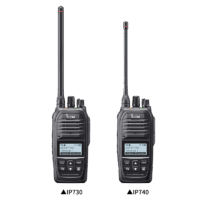
Icom IP730D & IP740D | Hybrid LTE & UHF/VHF Two-Way Radios
Contact us for a Special Price -

Icom IP503H & IP503H Lite | LTE 4G/3G PTT Radios
Contact us for a Special Price -

Motorola APX N50 P25 Single-Band Portable Two-Way Radio
Contact us for a Special Price -

ICOM IC-41PRO 6-Pack UHF CB Team Radio Bundle Kit
From $2,394.02 Inc GST -

Kenwood PKT-300 UHF Radio
Contact us for a Special Price -

Hytera HP7 UL913 Series Radio
Contact us for a Special Price -

MOTOTRBO R7Ex NKP Radio – Intrinsically Safe & Simple Use
Contact us for a Special Price -

MOTOTRBO R7Ex FKP Radio – Loud, Smart & Intrinsically Safe
Contact us for a Special Price -

EcoXGear EXG500-2PK IP67 Floating UHF CB Handheld Radio
$499.99 Inc GST -

EcoXGear EXG500 IP67 UHF CB Two-way Radio
$249.99 Inc GST -

Icom IC-F7010/7020/7040 P25 Radio – Smallest & Lightest
Contact us for a Special Price -

MOTOTRBO R5 Digital Radio, Non-Screen, Replaces DP2400e
From $1,218.80 Inc GST -

Motorola R5 Digital Radio with Screen, Replaces DP2600e
From $1,424.50 Inc GST -

Hytera P50 Series Industry Intelligent Push-to-Talk Radio
Contact us for a Special Price -

Hytera S1 Pro LF – Sleek & Secure Digital Two-Way Radio
From $412.50 Inc GST -

Hytera BP512 Business DMR Portable Two-way Radio
From $522.50 Inc GST -

Hytera HP71XEx IIC Intrinsically Safe DMR Two-Way Radio
From $2,634.50 Inc GST
Portable two-way radios for professional communication
When you need instant, reliable communication on the move, nothing beats a portable two-way radio. Compact, versatile and built for demanding environments, handheld radios keep your team connected whether you’re working indoors, outdoors, on site or on the road.
Radio Industries offers a comprehensive range of portable radios from leading brands, trusted across construction, security, hospitality and events, retail, transport, mining and emergency management. Our radios are chosen for clear audio, rugged durability and long battery life.
Choose the right handheld radio
Licence-free UHF CB radios
Simple, ready-to-use radios on the 80 public UHF CB channels, such as the Kenwood PKT-300 and GME TX6165. See UHF radios.
Digital DMR business radios
Clearer audio, better battery life and private licensed channels with radios like the Motorola R7, Hytera BP512 and Delta DS300.
Push-to-talk over cellular
Smart radios such as the MOTOTRBO Ion and Hytera PDC680 add 4G push-to-talk for Australia-wide reach. See push-to-talk radios.
Intrinsically safe radios
Certified handhelds for mining, oil and gas and chemical sites where flammable gas or dust may be present. See intrinsically safe radios.
Features worth looking for
Beyond range and audio, many professional handhelds include features that make teams safer and more efficient:
- GPS so a dispatcher can see where radios are
- Bluetooth for wireless earpieces and headsets
- Man down alerts that trigger if a radio is tilted or stops moving
- Lone worker alerts that check in with staff working alone
- IP67 or IP68 ratings for dust, rain and accidental submersion
Programmed, supported and ready to use
Tell us how your team works and we’ll recommend the right radio, program it to your channels before dispatch and supply matching batteries, chargers, earpieces and speaker mics. When something needs attention, our technicians handle servicing and repairs.
Need to cover a large site? Add a repeater, or ask about a private frequency licence for interference-free calls.
Portable Two-Way Radios FAQs
How far can a handheld two-way radio reach?
Handheld radios typically reach 3–5 km in built-up or bushy areas and further across open, flat ground with a clear line of sight. Buildings, hills and dense bush reduce range. A repeater or a push-to-talk over cellular radio extends coverage well beyond that.
Do I need a licence for a portable radio?
UHF CB radios on the 80 public channels are covered by the ACMA class licence, so no individual licence is needed. Commercial radios on a private channel need an apparatus licence from the ACMA. We can arrange private frequency licences for you.
What is the difference between analogue and digital (DMR) radios?
Analogue radios are simple and widely compatible. Digital DMR radios give clearer audio at the edge of coverage, longer battery life, two calls on one channel and features like text messaging, GPS and privacy. Many DMR radios can also work in analogue mode during a changeover.
Can you program the radios before they arrive?
Yes. Tell us your channels, or what your team needs, and we can program your radios before dispatch so they are ready to use.
Which accessories do I need?
Most teams add a spare battery or multi-bay charger and an earpiece or speaker mic for noisy or discreet work. Accessories are model-specific, so check our connector chart or ask us to match them to your radio.