
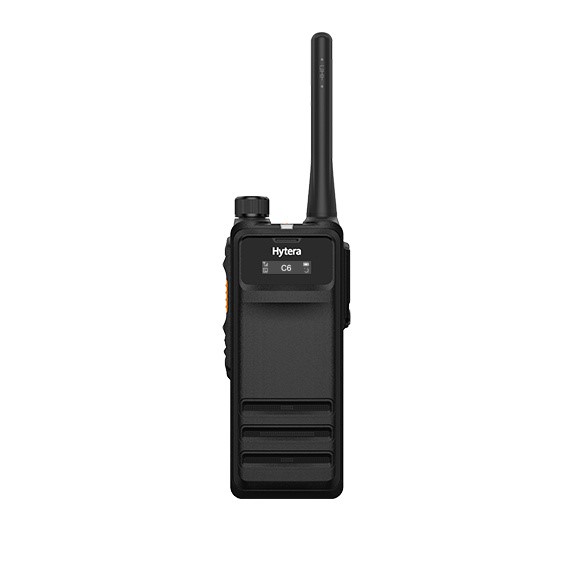
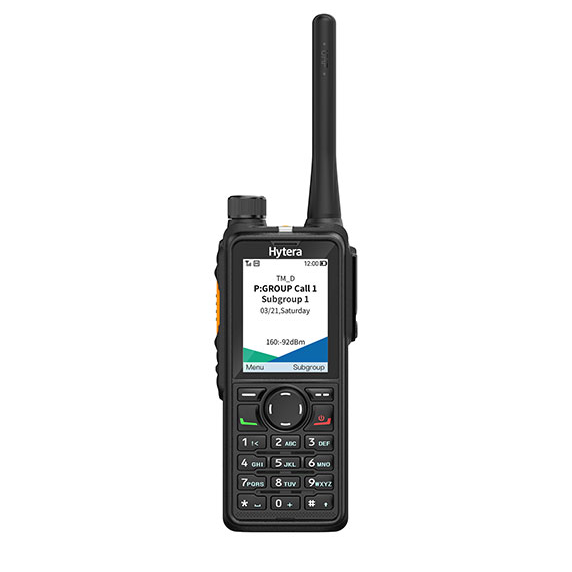
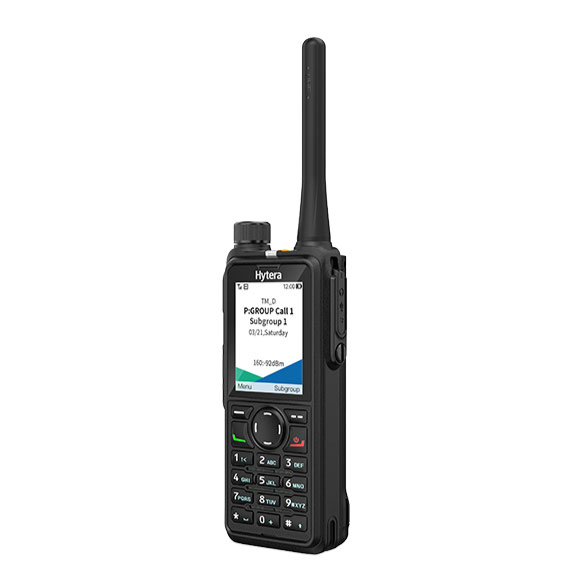
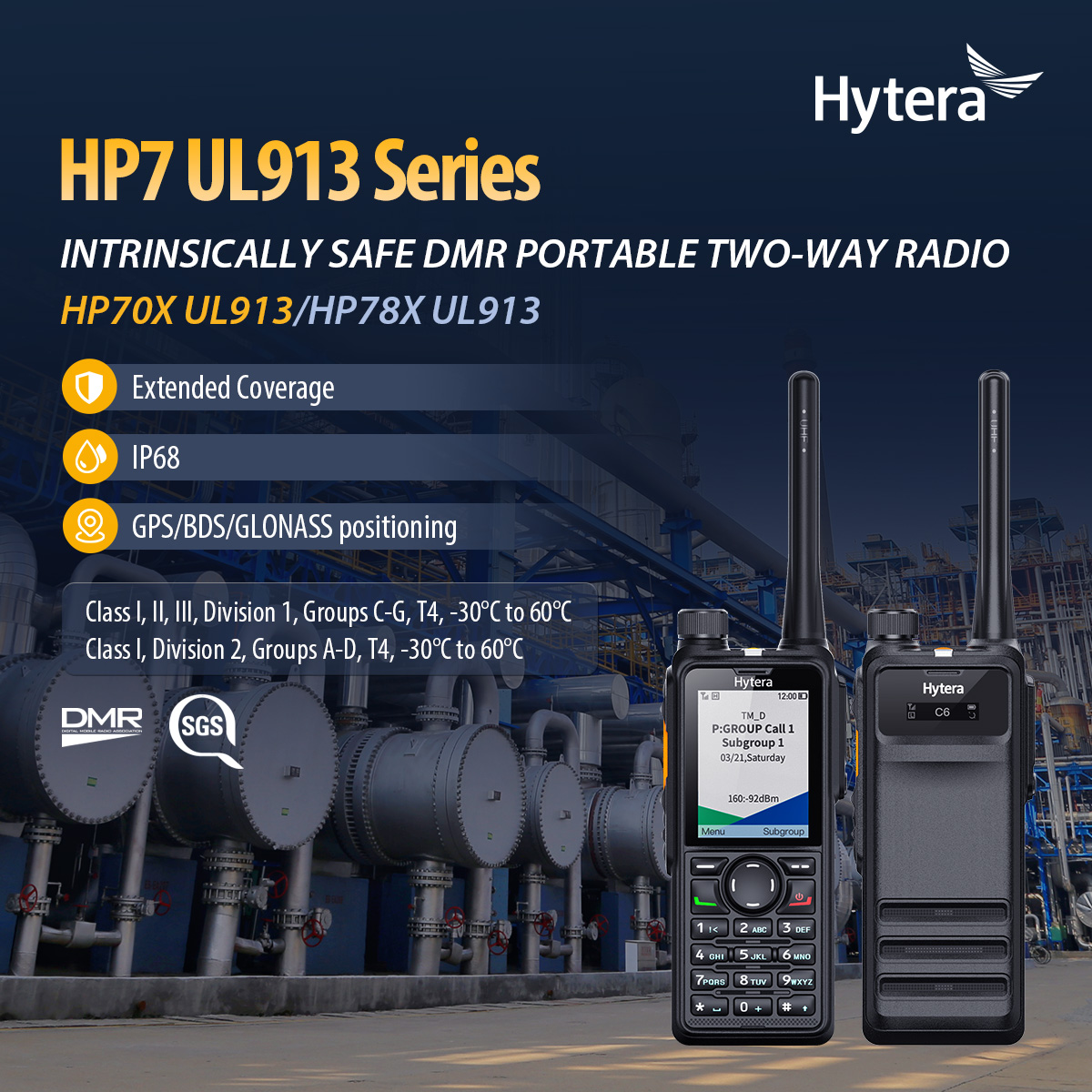
Hytera HP7 UL913 Series Radio
Contact us for a Special Price
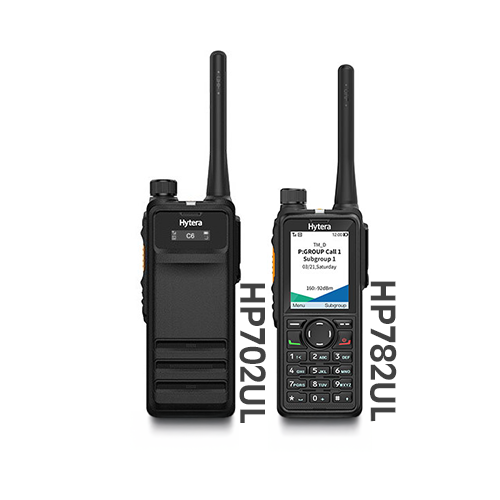
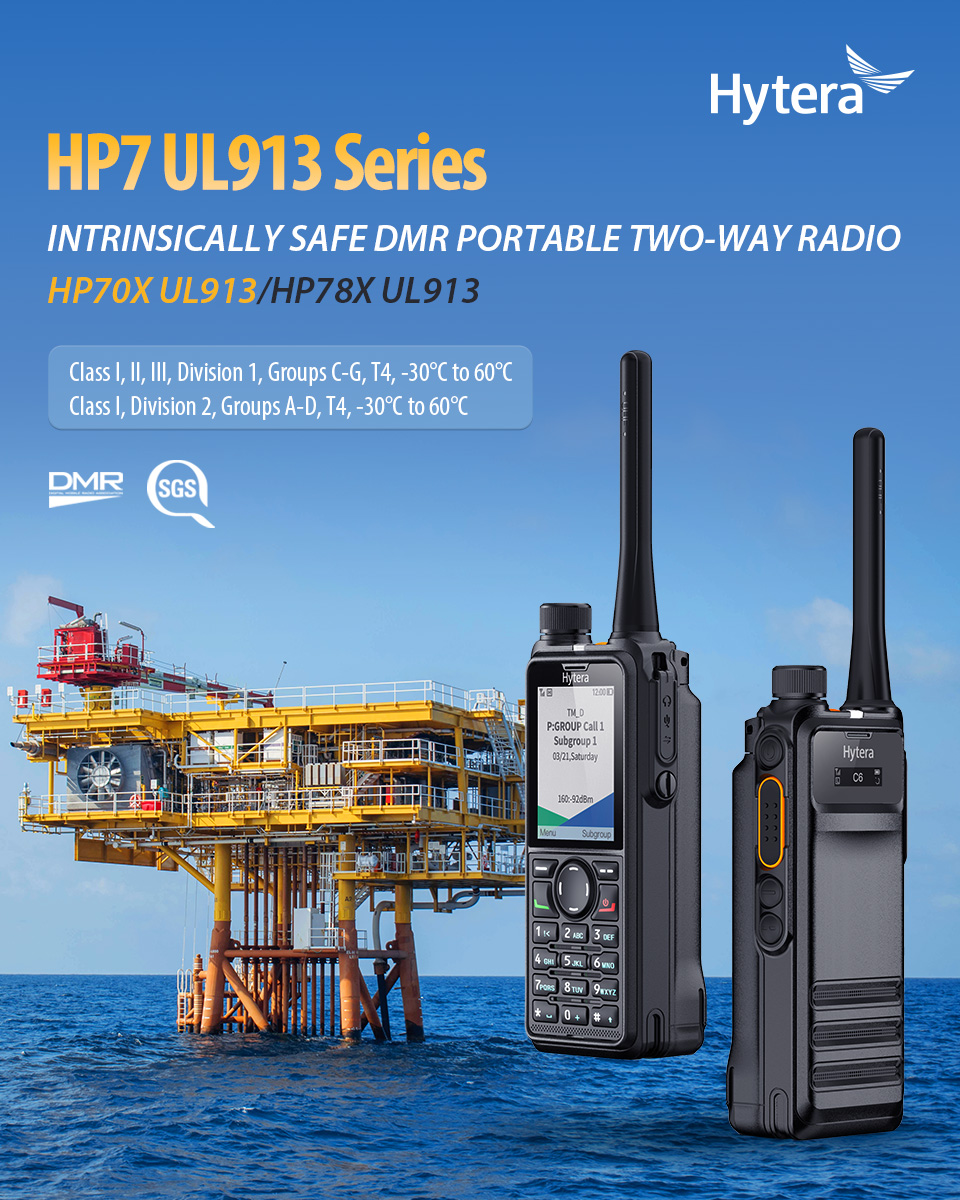
The Hytera HP7 UL913 Series is an intrinsically safe digital portable radio range, ideal for hazardous worksites. Available in two models:
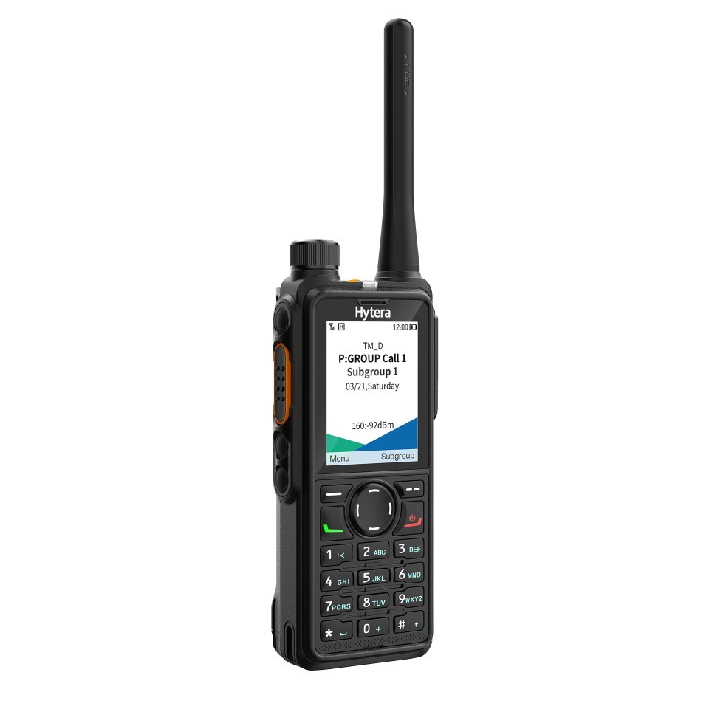
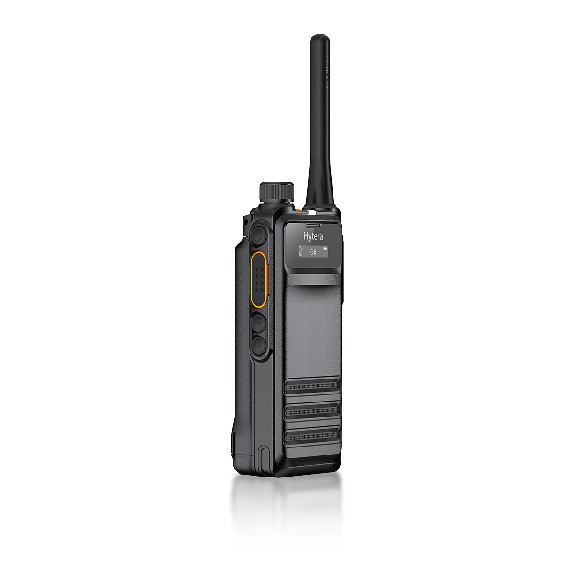
HP702 (no screen) and HP782 (with screen & keypad)—each with two options:
- Standard (UL): Man Down, no GPS/Bluetooth
- GBT Version: Includes GPS, Bluetooth & Man Down
Key features include:
✔ Up to 1024 channels
✔ DMR Tier II + Analogue Conventional
✔ Optional GPS & Bluetooth
✔ IP68 & MIL-STD-810G rugged build
✔ Emergency & Lone Worker (Man Down) alerts
✔ Intrinsically Safe (UL913 Certified)
✔ Available in UHF or VHF
Product enquiry — need a formal quote, availability, technical help or an alternative? Send us your details below.
Hytera HP7 UL913 Series: Rugged, Certified Digital Radios for Hazardous Environments
The Hytera HP7 UL913 Series is purpose-built for demanding industrial environments where safety, durability, and secure communication are non-negotiable. Comprising the HP702UL and HP782UL models, this intrinsically safe DMR radio range is certified to meet UL913 standards, making it suitable for use in explosive atmospheres such as oil & gas, mining, and chemical processing facilities.
With advanced digital functionality, up to 1024 programmable channels, and both UHF and VHF options, the HP7 UL913 Series ensures clear, reliable communication no matter how harsh the surroundings.
Built for Safety and Reliability
Certified for Class I, II, III, Division 1 & 2 hazardous locations, the HP702 and HP782 radios are equipped with essential safety features including:
- Man Down alert function for lone worker safety
- Analogue & Digital Emergency alerts
- IP68 and MIL-STD-810 G rating for dust, water, shock, and temperature resistance
- Optional GPS for location tracking and Bluetooth for wireless accessories
Whether you choose the HP702UL for a streamlined, non-display model or the feature-rich HP782UL with full keypad and screen, both radios offer mixed-mode scanning (analogue & digital), multi-site roaming, and encryption for secure communications.
Versatile Communication at Your Fingertips
With support for DMR Tier II and Tier III trunking, plus XPT digital trunking and pseudo trunking (DMO & RMO), the HP7 series adapts to your network needs. Features like digital voice calls, text messaging, and voice channel change notifications provide users with flexible and efficient communication tools.
Additionally, supplemental services such as remote monitoring, call alert, and radio enable/disable functions offer remote control over field units, ideal for supervisors and safety officers.
Designed for the Harshest Worksites
The Hytera HP702 and HP782 UL913 radios are constructed for performance across extreme temperatures (-30°C to 60°C). With superior voice clarity, robust housing, and long-lasting battery life via the included BL2801-Ex battery, your team stays connected through long shifts, day or night.
Standard Package Includes:
- HP702UL or HP782UL Radio
- Li-Polymer Battery (BL2801-Ex)
- Single Unit Charger (CH10L27)
- Switching Power Adapter
- Standard UHF or VHF Antenna
- Leather Strap
- Belt Clip (BC39)
Model Variants:
- HP702UL – Without GPS/Bluetooth, with Man Down
- HP702UL GBT – With GPS & Bluetooth, with Man Down
- HP782UL – Without GPS/Bluetooth, with Man Down
- HP782UL GBT – With GPS & Bluetooth, with Man Down
Trusted for mission-critical safety and performance, the Hytera HP7 UL913 Series is the ideal digital radio solution for industries operating in explosive or hazardous zones. Invest in communication that won’t let you down – no matter the challenge.
Additional information
| Manufacturer | Hytera |
|---|---|
| Product Type | Radio – Portable (Handheld) |
| Radio Type | Analog, Digital (DMR) |
| Battery Capacity | 2850mAh |
| Battery Type | Li-ion |
| Channel Capacity | 1024 |
| Frequency Band | UHF, VHF |
| Intrinsically Safe | UL |
| GPS | Yes – Selected Model/s Only |
| Bluetooth | Yes – Selected Model/s Only |
Find the right earpiece, headset or microphone
Accessories connect to two-way radios with different plug types. Check your radio’s connector before ordering, or call us on 1300 266 682 and we’ll confirm compatibility for you.
Frequently Asked Questions
How Far Can Two-Way Radios Reach?
Two-way radios operate using line-of-sight communication, which means buildings, hills, steel structures and other obstacles can affect range. Actual distance depends on the environment, radio power, antenna type and system setup.
Typical examples:
- Small offices or retail: hundreds of metres
- Warehouses and construction sites: 1–3 km
- Open outdoor areas: several kilometres
- Repeaters or Push-to-Talk over Cellular systems: Australia-wide coverage
If coverage is critical, Radio Industries can help design the right communication solution.
What Channels Can I Use?
In Australia, radios can operate on:
- UHF CB channels (1–80) – public shared channels available for general use
- Private licensed frequencies – dedicated channels licensed through ACMA for business use
- Digital radio systems – for improved audio and advanced features
- Push-to-Talk over Cellular (PoC) – communication over mobile networks and Wi-Fi
The right option depends on your application and operating environment.
Which Radio Is Best?
There is no one-size-fits-all answer. The best radio depends on:
- Your industry
- Required coverage area
- Team size
- Indoor or outdoor use
- Safety requirements
- Noise levels
- Whether you require UHF CB, licensed channels or nationwide communication
A warehouse team may need digital radios, while transport fleets may benefit from Push-to-Talk over Cellular systems.
Do I Need A Private Frequency?
Not always. UHF CB channels are suitable for many general communication applications.
However, private frequencies are recommended where:
- Communication is safety critical
- Teams operate around cranes or major construction projects
- Privacy is important
- Multiple users share the same location
- Interference must be minimised
Dedicated channels help improve reliability and reduce unwanted outside traffic.
What Is The Difference Between a Two-Way Radio, Walkie Talkie and Handy Talkie?
They generally refer to the same type of device.
In professional environments, Two-Way Radio is the preferred industry term. “Walkie Talkie” and “Handy Talkie” are commonly used for recreational or consumer products.
What Is The Difference Between Analogue and Digital Radios?
Analogue radios use traditional radio technology and are often suitable for basic communication requirements.
Digital radios provide:
- Clearer audio quality
- Better noise reduction
- Longer battery life
- Improved coverage performance
- Advanced features such as private calling and GPS
Digital systems are commonly used by businesses requiring higher performance and reliability.
What Is Push-to-Talk Over Cellular (PoC)?
Push-to-Talk over Cellular works like a two-way radio but uses 4G, 5G and Wi-Fi networks instead of traditional radio signals.
Benefits include:
- Australia-wide coverage
- GPS tracking
- Group communication
- No repeater infrastructure required
- Easy expansion across multiple locations
This solution is ideal for transport, security, events and nationwide operations.
Can Two-Way Radios Work Australia-Wide?
Traditional radios have distance limitations unless repeaters are used.
For nationwide communication, many businesses choose Push-to-Talk over Cellular systems, which operate across mobile networks and Wi-Fi.
Can Different Brands Of Radios Communicate Together?
Sometimes.
Compatibility depends on:
- Frequency settings
- Channel programming
- Analogue or digital mode
- Signalling protocols (IDAS, DMR, NXDN, TETRA, P25)
- System configuration (Capacity Plus, Capacity Max, P25)
Even radios from different manufacturers may communicate if correctly programmed.
Do Radios Need Programming Before Use?
Many professional radios require setup before deployment.
Programming may include:
- Channel configuration
- Private frequencies
- User groups
- Emergency functions
- Scan lists
- Button customisation
Radio Industries can pre-program and configure systems before dispatch.
Can I Use Headsets With Two-Way Radios?
Yes. Many industries use headsets and accessories to improve communication and safety.
Popular options include:
- Noise-cancelling headsets
- Hearing protection communication headsets
- Earpieces
- Remote speaker microphones
- Push-to-talk accessories
These are commonly used in construction, security, industrial sites and events.
Are Two-Way Radios Waterproof?
This depends on the model.
Many commercial radios include protection ratings such as:
- IP54 – Protected against limited dust ingress and resistant to water splashes from any direction. Suitable for indoor use, retail, warehouses and light outdoor environments.
- IP67 – Fully protected against dust and can withstand temporary immersion in water up to 1 metre for up to 30 minutes. Commonly used on construction sites, security operations and harsh environments.
- IP68 – Fully dustproof with enhanced water protection beyond IP67 standards. Exact depth and duration vary by manufacturer, but these radios are designed for more demanding environments with heavy dust, rain and exposure to water.
The right rating depends on your work environment.
Can Radios Be Used On Construction Sites?
Yes. Two-way radios are widely used across construction projects for coordination, safety and productivity.
Many sites use:
- Rugged digital radios
- Hearing protection headsets
- Vehicle-mounted radios
- Dedicated licensed frequencies
Radio Industries can recommend systems suited to site conditions and OH&S requirements.
Do You Offer Repairs And Ongoing Support?
Yes.
Radio Industries provides:
✔ Repairs and servicing
✔ Programming and setup
✔ Genuine parts and accessories
✔ System upgrades
✔ Technical support
✔ Australia-wide assistance
We support customers long after the initial purchase.
Still Not Sure Which Communication Solution You Need?
Every site and business is different. Speak with Radio Industries for expert advice on choosing the right radio communication system for your team.
Why Radio Industries? Two-way radio specialists since 1985, with Australia-wide supply, programming and support. About us → · Working in a hazardous area? Intrinsically safe radios →