

Motorola XVP830 Remote Speaker Microphone – PMMN4136
$699.60 Inc GST
Motorola XVP830 remote speaker microphone for APX and APX NEXT radios. 4 HDR microphones with adaptive noise suppression, IP68 submersible and TIA-4950 intrinsically safe for hazardous environments.
Product enquiry — need a formal quote, availability, technical help or an alternative? Send us your details below.
Motorola XVP830 Remote Speaker Microphone (PMMN4136)
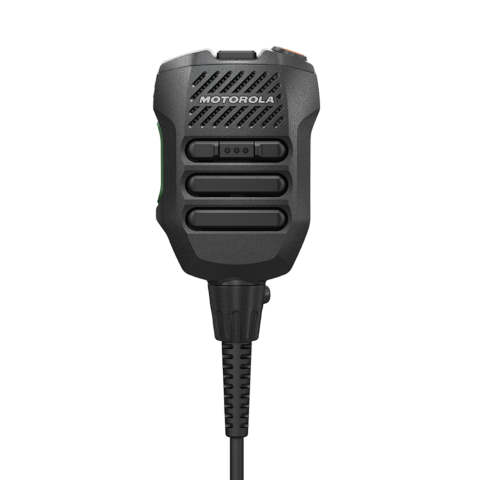 The Motorola XVP830 (PMMN4136) is a rugged remote speaker microphone (RSM) built for APX and APX NEXT users who work in loud, wet and hazardous environments. Because it uses four HDR microphones with multi-mic noise suppression, it follows the user’s voice and filters out surrounding noise, whichever way the RSM is facing. As a result, your message gets through clearly on the first transmission.
In addition, it is IP68 rated for submersion and certified intrinsically safe to TIA-4950. For example, fire and emergency services, mining, oil and gas, utilities and industrial teams across Australia rely on it in tough conditions.
Key features
- 4 HDR microphones with multi-mic adaptive noise suppression
- Loud, clear speaker with volume control
- IP68 – dust-tight and submersible
- Intrinsically safe – certified to TIA-4950 for hazardous locations
- Orange emergency button plus multiple programmable buttons
- ViQi button for ViQi Voice Control and Virtual Partner on APX NEXT (software options required)
- 3.5 mm audio jack for an earpiece
- IMPRES audio technology
- No channel knob – a clean, snag-free design
Compatible Motorola radios
- APX NEXT and APX NEXT XE
- APX 8000, APX 8000XE, APX 8000H and APX 8000HXE
- APX 6000 and APX 6000XE
- SRX 2200
However, your radio needs firmware R24.00.00 or later on APX, or R03.20.00 or later on APX NEXT. Not sure if your fleet is compatible? Ask our team, because we can check compatibility and programming for you.
Specifications
| Part number (MPN) | PMMN4136 |
|---|---|
| Microphones | 4 × HDR, multi-mic noise suppression |
| Ingress protection | IP68 |
| Intrinsic safety | TIA-4950 |
| Audio jack | 3.5 mm (non-threaded) |
| Channel knob | No |
| Dimensions | 58 × 31 × 93 mm (W × H × L) |
| Weight | 290 g |
Why buy from Radio Industries?
Radio Industries is an authorised Motorola Solutions Gold Channel Partner and has supplied two-way radio communications since 1985. Therefore, you get genuine Motorola accessories with Australia-wide delivery. We can also program, service and support your APX radios.
Additional information
Find the right earpiece, headset or microphone
Accessories connect to two-way radios with different plug types. Check your radio’s connector before ordering, or call us on 1300 266 682 and we’ll confirm compatibility for you.
Frequently Asked Questions
How Far Can Two-Way Radios Reach?
Two-way radios operate using line-of-sight communication, which means buildings, hills, steel structures and other obstacles can affect range. Actual distance depends on the environment, radio power, antenna type and system setup.
Typical examples:
- Small offices or retail: hundreds of metres
- Warehouses and construction sites: 1–3 km
- Open outdoor areas: several kilometres
- Repeaters or Push-to-Talk over Cellular systems: Australia-wide coverage
If coverage is critical, Radio Industries can help design the right communication solution.
What Channels Can I Use?
In Australia, radios can operate on:
- UHF CB channels (1–80) – public shared channels available for general use
- Private licensed frequencies – dedicated channels licensed through ACMA for business use
- Digital radio systems – for improved audio and advanced features
- Push-to-Talk over Cellular (PoC) – communication over mobile networks and Wi-Fi
The right option depends on your application and operating environment.
Which Radio Is Best?
There is no one-size-fits-all answer. The best radio depends on:
- Your industry
- Required coverage area
- Team size
- Indoor or outdoor use
- Safety requirements
- Noise levels
- Whether you require UHF CB, licensed channels or nationwide communication
A warehouse team may need digital radios, while transport fleets may benefit from Push-to-Talk over Cellular systems.
Do I Need A Private Frequency?
Not always. UHF CB channels are suitable for many general communication applications.
However, private frequencies are recommended where:
- Communication is safety critical
- Teams operate around cranes or major construction projects
- Privacy is important
- Multiple users share the same location
- Interference must be minimised
Dedicated channels help improve reliability and reduce unwanted outside traffic.
What Is The Difference Between a Two-Way Radio, Walkie Talkie and Handy Talkie?
They generally refer to the same type of device.
In professional environments, Two-Way Radio is the preferred industry term. “Walkie Talkie” and “Handy Talkie” are commonly used for recreational or consumer products.
What Is The Difference Between Analogue and Digital Radios?
Analogue radios use traditional radio technology and are often suitable for basic communication requirements.
Digital radios provide:
- Clearer audio quality
- Better noise reduction
- Longer battery life
- Improved coverage performance
- Advanced features such as private calling and GPS
Digital systems are commonly used by businesses requiring higher performance and reliability.
What Is Push-to-Talk Over Cellular (PoC)?
Push-to-Talk over Cellular works like a two-way radio but uses 4G, 5G and Wi-Fi networks instead of traditional radio signals.
Benefits include:
- Australia-wide coverage
- GPS tracking
- Group communication
- No repeater infrastructure required
- Easy expansion across multiple locations
This solution is ideal for transport, security, events and nationwide operations.
Can Two-Way Radios Work Australia-Wide?
Traditional radios have distance limitations unless repeaters are used.
For nationwide communication, many businesses choose Push-to-Talk over Cellular systems, which operate across mobile networks and Wi-Fi.
Can Different Brands Of Radios Communicate Together?
Sometimes.
Compatibility depends on:
- Frequency settings
- Channel programming
- Analogue or digital mode
- Signalling protocols (IDAS, DMR, NXDN, TETRA, P25)
- System configuration (Capacity Plus, Capacity Max, P25)
Even radios from different manufacturers may communicate if correctly programmed.
Do Radios Need Programming Before Use?
Many professional radios require setup before deployment.
Programming may include:
- Channel configuration
- Private frequencies
- User groups
- Emergency functions
- Scan lists
- Button customisation
Radio Industries can pre-program and configure systems before dispatch.
Can I Use Headsets With Two-Way Radios?
Yes. Many industries use headsets and accessories to improve communication and safety.
Popular options include:
- Noise-cancelling headsets
- Hearing protection communication headsets
- Earpieces
- Remote speaker microphones
- Push-to-talk accessories
These are commonly used in construction, security, industrial sites and events.
Are Two-Way Radios Waterproof?
This depends on the model.
Many commercial radios include protection ratings such as:
- IP54 – Protected against limited dust ingress and resistant to water splashes from any direction. Suitable for indoor use, retail, warehouses and light outdoor environments.
- IP67 – Fully protected against dust and can withstand temporary immersion in water up to 1 metre for up to 30 minutes. Commonly used on construction sites, security operations and harsh environments.
- IP68 – Fully dustproof with enhanced water protection beyond IP67 standards. Exact depth and duration vary by manufacturer, but these radios are designed for more demanding environments with heavy dust, rain and exposure to water.
The right rating depends on your work environment.
Can Radios Be Used On Construction Sites?
Yes. Two-way radios are widely used across construction projects for coordination, safety and productivity.
Many sites use:
- Rugged digital radios
- Hearing protection headsets
- Vehicle-mounted radios
- Dedicated licensed frequencies
Radio Industries can recommend systems suited to site conditions and OH&S requirements.
Do You Offer Repairs And Ongoing Support?
Yes.
Radio Industries provides:
✔ Repairs and servicing
✔ Programming and setup
✔ Genuine parts and accessories
✔ System upgrades
✔ Technical support
✔ Australia-wide assistance
We support customers long after the initial purchase.
Still Not Sure Which Communication Solution You Need?
Every site and business is different. Speak with Radio Industries for expert advice on choosing the right radio communication system for your team.
Why Radio Industries? Two-way radio specialists since 1985, with Australia-wide supply, programming and support. About us → · Working in a hazardous area? Intrinsically safe radios →
