
UHF Radios
UHF radios for business, recreation, traffic control and light industrial work across Australia.
UHF is the most popular band for Australian business radio. This range includes licence-free UHF CB handhelds such as the GME TX6165 and Delta DX-300, commercial handhelds like the Hytera BP562, Entel DX400 and Vertex VX-556, and vehicle radios such as the GME CM40 and MGX R1.
UHF CB radios use the 80 public channels and are ready to use out of the box. Commercial UHF radios can be programmed to a licensed private channel for clearer, interference-free calls. Check wattage, IP rating, battery capacity and whether you need digital (DMR) or analogue operation.
Browse handheld radios, vehicle radios or value packs for teams.
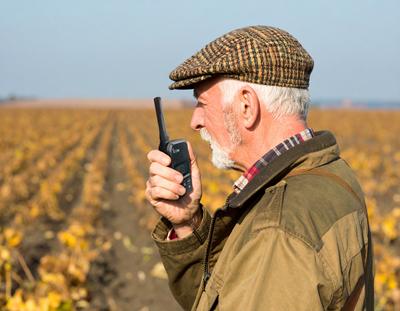
Trusted by Australian businesses and government















Shop UHF Radios by brand
Showing 1–24 of 50 resultsSorted by latest
-
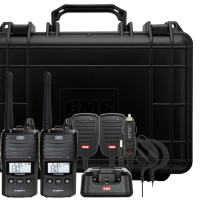
GME TX6165TP – 5/1 Watt UHF CB Handheld Radio Twin Pack
$639.00 Inc GST -
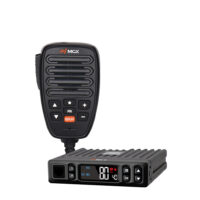
MGX C1 | Compact UHF LMR/CB Radio with Noise Cancelling
$328.90 Inc GST -
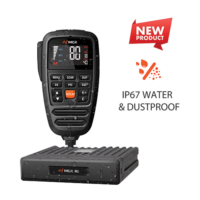
MGX R1 12/24V Waterproof UHF/LMR Hybrid Mobile Radio w/ Mic
From $449.00 Inc GST -
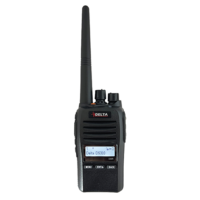
Delta DS310 Digital Radio | Compact, Waterproof, Noise-Free
$691.90 Inc GST -
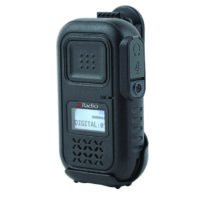
Smallest Digital Walkie Talkie | XRadio DX-300 DMR Radio
$434.50 Inc GST -
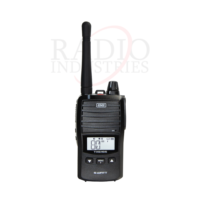
GME TX6165 5/1W UHF CB Handheld Radio with Accessories
$349.00 Inc GST -

Hytera BP562 DMR Portable Radio
From $654.50 Inc GST -

Entel DX400 Series Digital & Analogue Two-Way Radios
From $603.90 Inc GST -

GME CM40 Commercial Analog Mobile Radio
Contact us for a Special Price -

Vertex VX-556 Ultimate Commercial Portable Radio
$539.00 Inc GST -

GME CP40 Commercial Two-Way Radio
Contact us for a Special Price -

Entel DX485U-CB Two-Way Radio
$533.50 Inc GST -

Simoco SRP9180 Portable Radio
Contact us for a Special Price -

Simoco SRM9030plus Mobile Radio Communication System
Contact us for a Special Price -

Simoco SRM9022 Mobile Radio Kit
Contact us for a Special Price -

Simoco SRM9020plus Mobile Radio
Contact us for a Special Price -

Simoco SRM9010 Mobile Radio Kit
Contact us for a Special Price -

Simoco Xd SDM730: Rugged, Secure Digital Radio Solution
Contact us for a Special Price -

Icom IC-F5023/IC-F6023
Contact us for a Special Price -

Delta DV-520 Digital Mobile Radio
$984.50 Inc GST -
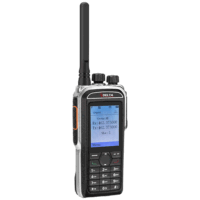
Delta DS580 Professional, Digital Two Way Radio
From $1,094.50 Inc GST -

Icom IC-455 Mobile UHF CB Radio
$494.00 Inc GST -

Uniden UH755-2DLX UHF CB Two-Way Radio Twin Pack
Contact us for a Special Price -

Uniden UH755 UHF CB Portable
Contact us for a Special Price
UHF radios for work, travel and recreation
Looking for UHF radios in Australia? Radio Industries stocks one of the country’s largest ranges of UHF CB and commercial UHF radios, from handheld walkie talkies to vehicle-mounted units, trusted by tradies, farmers, 4WD travellers and businesses nationwide.
UHF CB radios operate on Australia’s public 80-channel UHF CB band, giving you instant, subscription-free communication. They’re built for construction sites, transport fleets, farms, 4WD touring, events, security teams and industrial operations where reliable comms matter most.
We don’t just sell UHF radios. Our team helps you choose, configure and support the right system, whether that’s a single handheld or a fleet-wide rollout.
Our UHF radio range
Handheld UHF radios
Walkie talkies from GME, Delta, Uniden and Kenwood for on-foot work and recreation. See all handheld radios.
Vehicle-mounted UHF radios
In-car and machinery radios such as the GME XRS Connect and MGX R1 for more power and range. See vehicle radios.
Commercial UHF radios
Business radios from Hytera, Entel and Simoco that can run on a licensed private channel, in analogue or digital.
Antennas and accessories
Vehicle antennas, mounts, speaker mics and batteries to get the most from your radio.
- Waterproof and rugged UHF models
- Digital and analogue UHF radios
- UHF radios with private channel capability
Handheld or vehicle-mounted?
A handheld suits anyone on foot and gives you a radio you can take anywhere. A vehicle-mounted radio has more transmit power and uses an external antenna, so it usually reaches further. Many teams use both: in-car radios in the fleet and handhelds for staff on site.
Why choose Radio Industries for UHF radios?
Radio Industries is trusted by businesses across Australia for complete communication solutions, from small teams through to large national operations. Unlike standard consumer retailers, we provide:
- Expert advice from communication specialists
- System design and configuration
- Programming and setup services
- Genuine accessories and spare parts
- Technical support, servicing and repairs
- Australia-wide supply and support
UHF Radios FAQs
Do I need a licence to use a UHF CB radio?
No. UHF CB radios on the 80-channel public band (476.4250–477.4125 MHz) are covered by ACMA’s Citizens Band Radio Stations Class Licence, so there’s no cost or application. Your equipment must be type-approved and carry the Regulatory Compliance Mark. Commercial UHF radios outside this band need an individual licence from the ACMA, and our team can help you work out which applies.
How far can a UHF radio reach?
Handheld UHF radios typically reach 3–5 km in built-up or bushy areas, and up to around 15 km in open, flat terrain with a clear line of sight. Vehicle-mounted units with a higher-gain antenna generally perform better, and repeater channels can extend range significantly in hilly regions.
Why is real-world range often less than the 15 km on the box?
Radio range works a lot like line of sight. On flat ground at eye height, the horizon is only about 4.5–5 km away, which is roughly the realistic range of a standard 5-watt UHF CB radio. Packaging figures are usually achieved hilltop to hilltop. Lower-wattage radios fall short of that, and hills, buildings and dense bush can cut range to a few hundred metres. For more range, consider a push-to-talk over cellular radio, a VHF radio in some open terrain, or a repeater.
What is the difference between UHF CB and commercial UHF radios?
UHF CB radios share a licence-free public band, which is free to use but can be congested in busy areas. Commercial UHF radios run on individually licensed frequencies, giving a clearer, private channel free from public chatter. That suits businesses needing consistent, interference-free communication across a site or fleet.
Is a UHF radio the same as a UHF CB radio?
Not quite. UHF refers to a frequency range, in Australia roughly 400–520 MHz. UHF CB means radios on the public 80-channel band, which is licence-free. Every UHF CB radio is a UHF radio, but not every UHF radio is a UHF CB. If you need a private, licensed channel outside the CB band, an individual ACMA licence applies.
Are there official UHF channels for 4WD or camping?
Not officially. No channel is legally designated for activities like 4WD touring or camping; some channels are simply used that way by convention. Channels 5 and 35 are reserved for emergencies and should be left clear unless you need help. See our UHF CB channel list.